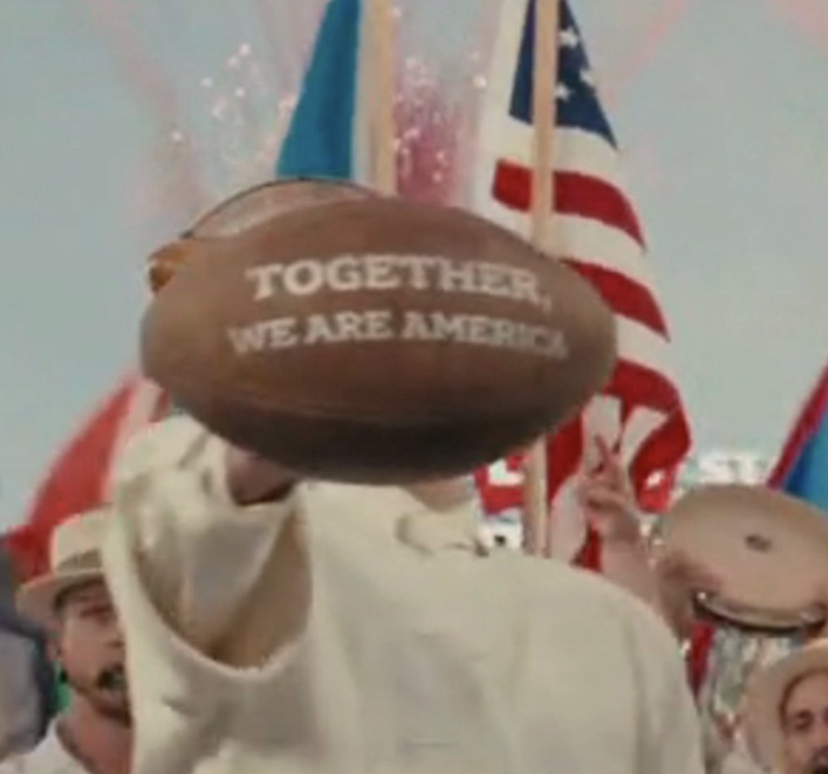
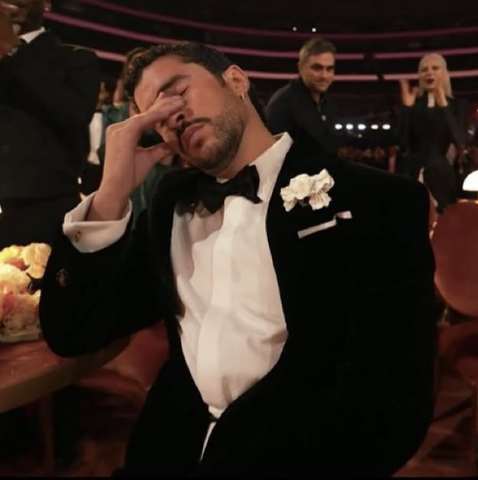
BENITO BOWL BREAKDOWN
Bad Bunny Halftime Show Super Bowl 60
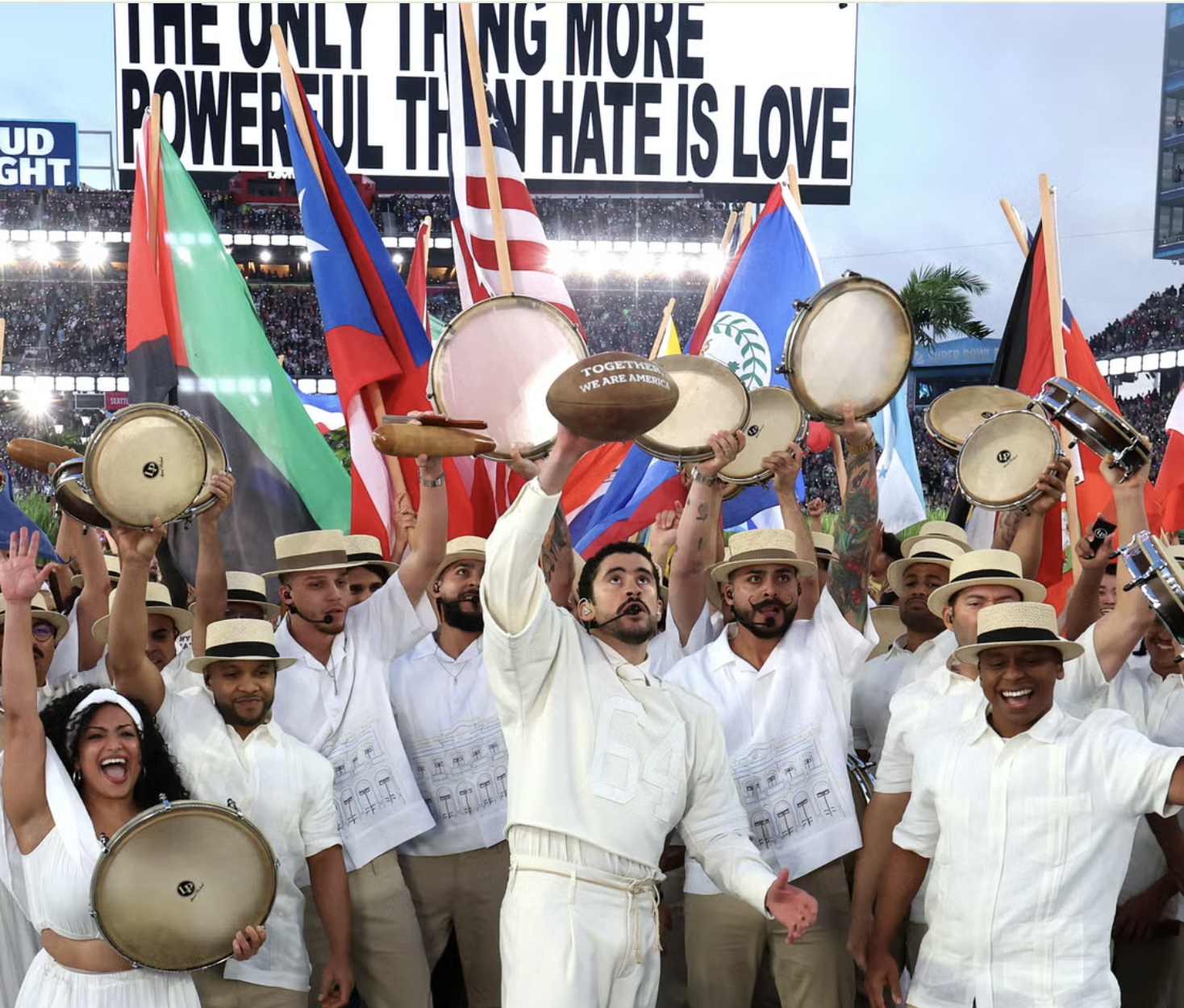
what just happened…
(a partial, yet thorough, recap)
the more you know!!!!!!!!!
...who is Bad Bunny?
Benito Antonio Martínez Ocasio (BAD BUNNY)
Puerto Rican singer, rapper, and producer aka Latin Cultural / Global Icon
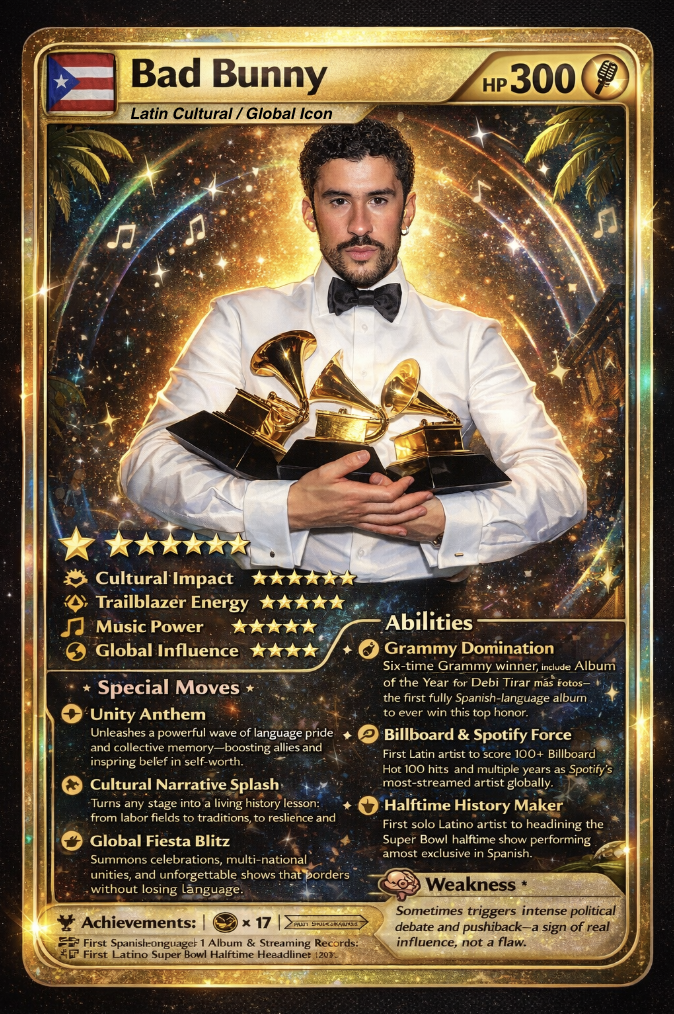
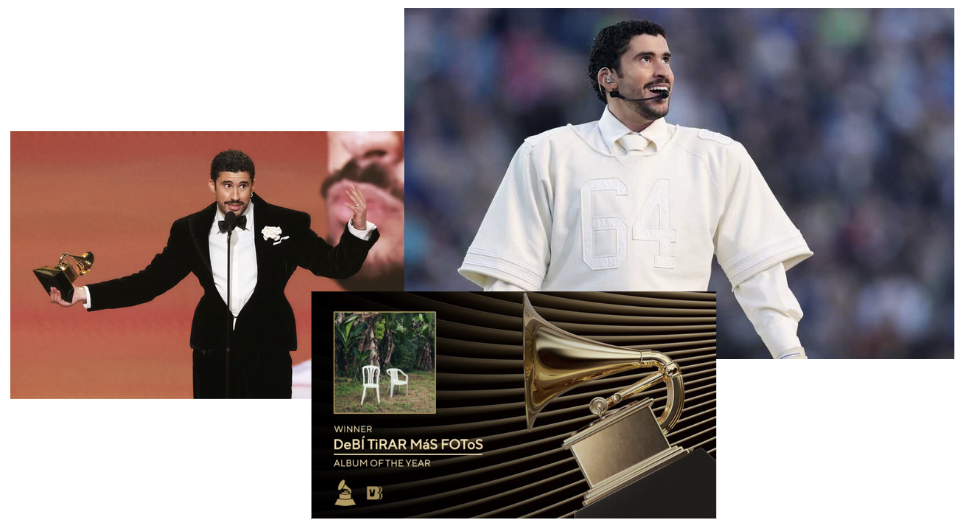
In one week, his album Debí Tirar Más Fotos became the first fully Spanish-language album to win Grammy Album of the Year, AND he became the first solo Latino artist to headline the Super Bowl halftime show.
…Puerto Rico???
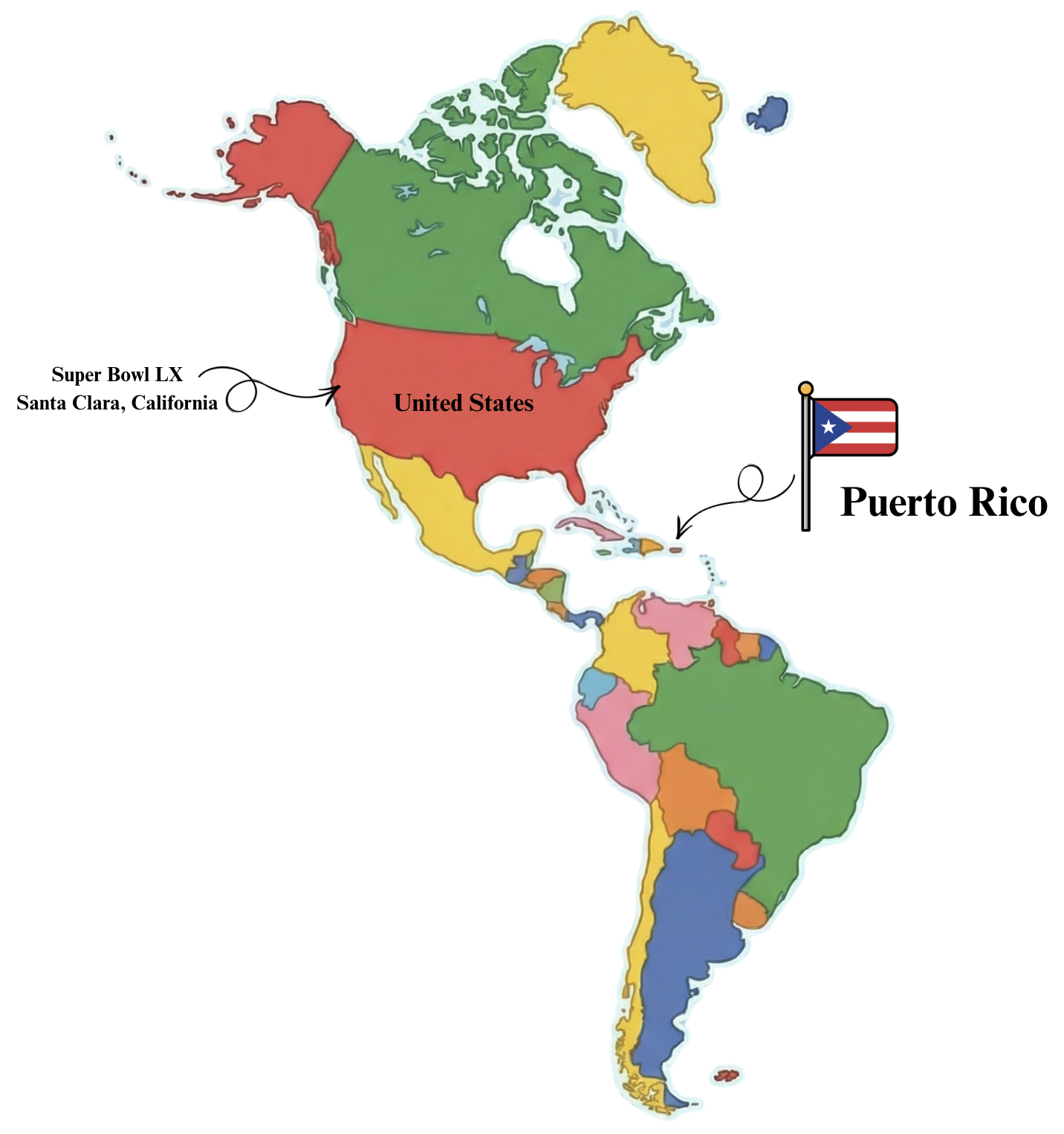
Puerto Rico & The United States
In 1898, after the Spanish-American War, the United States took control of Puerto Rico from Spain
In 1952, Puerto Rico became a “Commonwealth,” allowing local self-governance (not full statehood or independence)
Puerto Rico is officially classified as an “unincorporated U.S. territory” ……….
Puerto Ricans have been U.S. citizens since 1917, but they cannot vote for president and do not have voting representation in Congress, Congress can still override Puerto Rican law
North, Central & South America
Okayyy let’s break down the show:
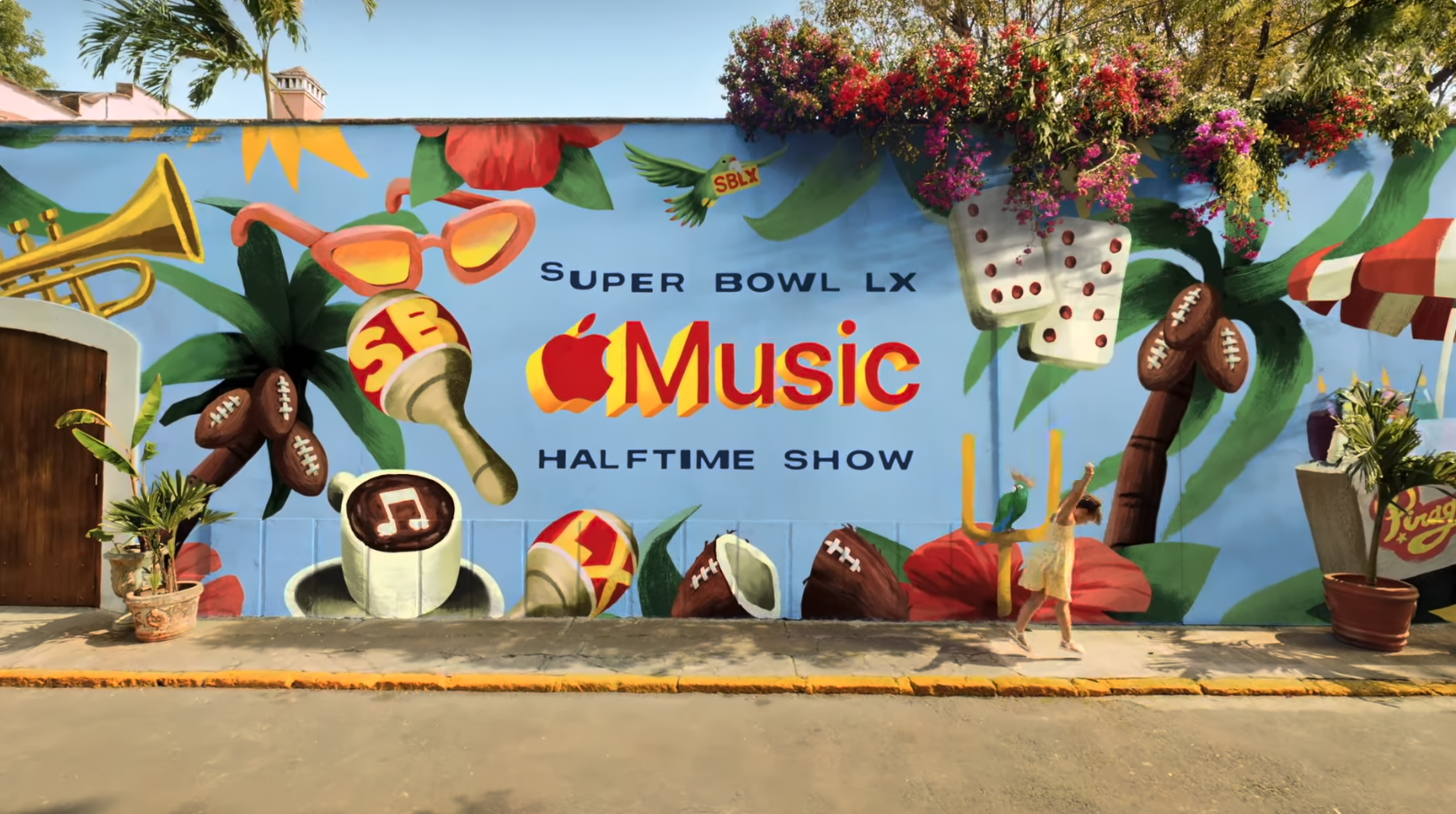
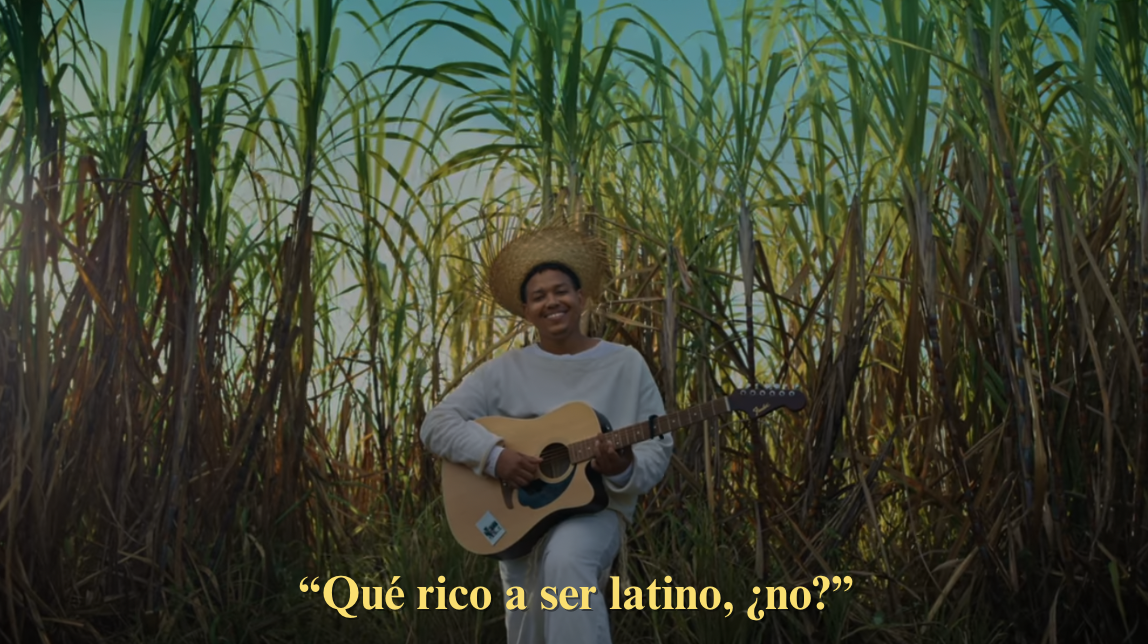
(How wonderful it is to be Latino)
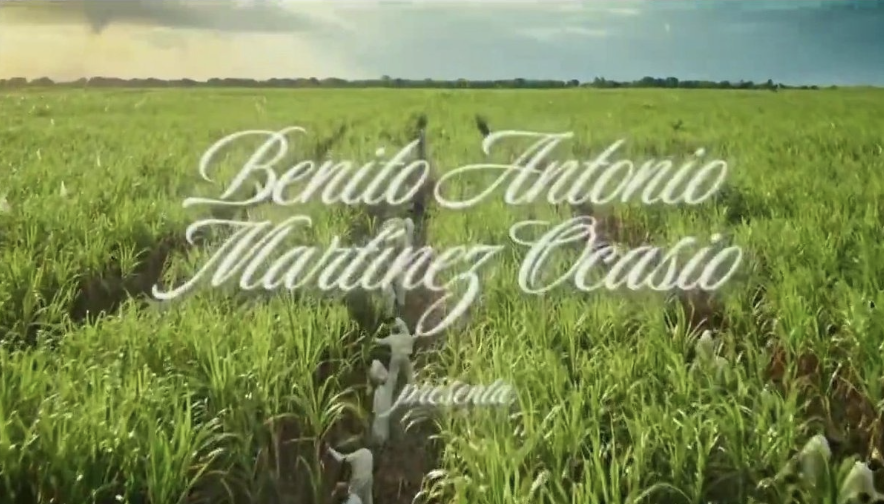
(Benito Antonio Martinez Ocasio presents)
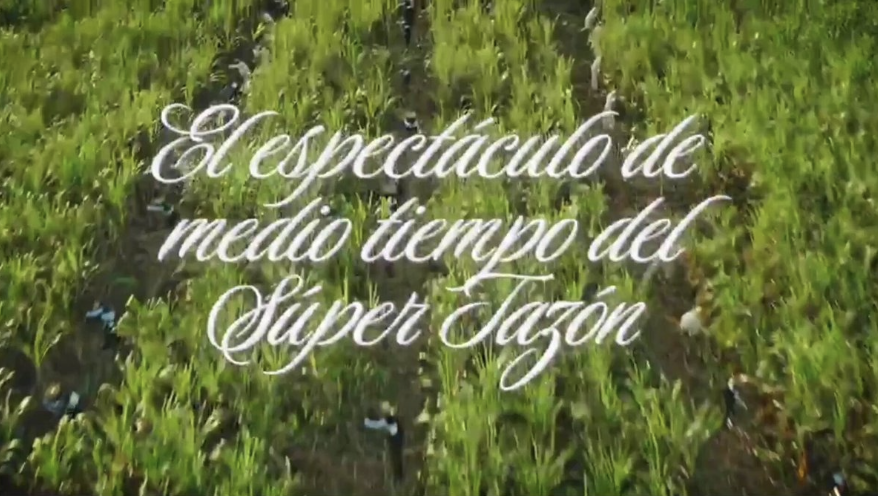
(The Super Bowl Halftime Show)
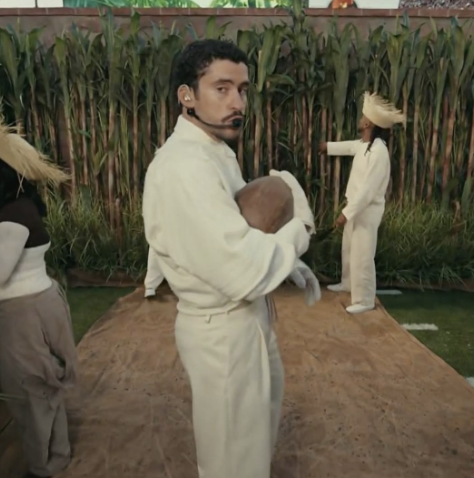
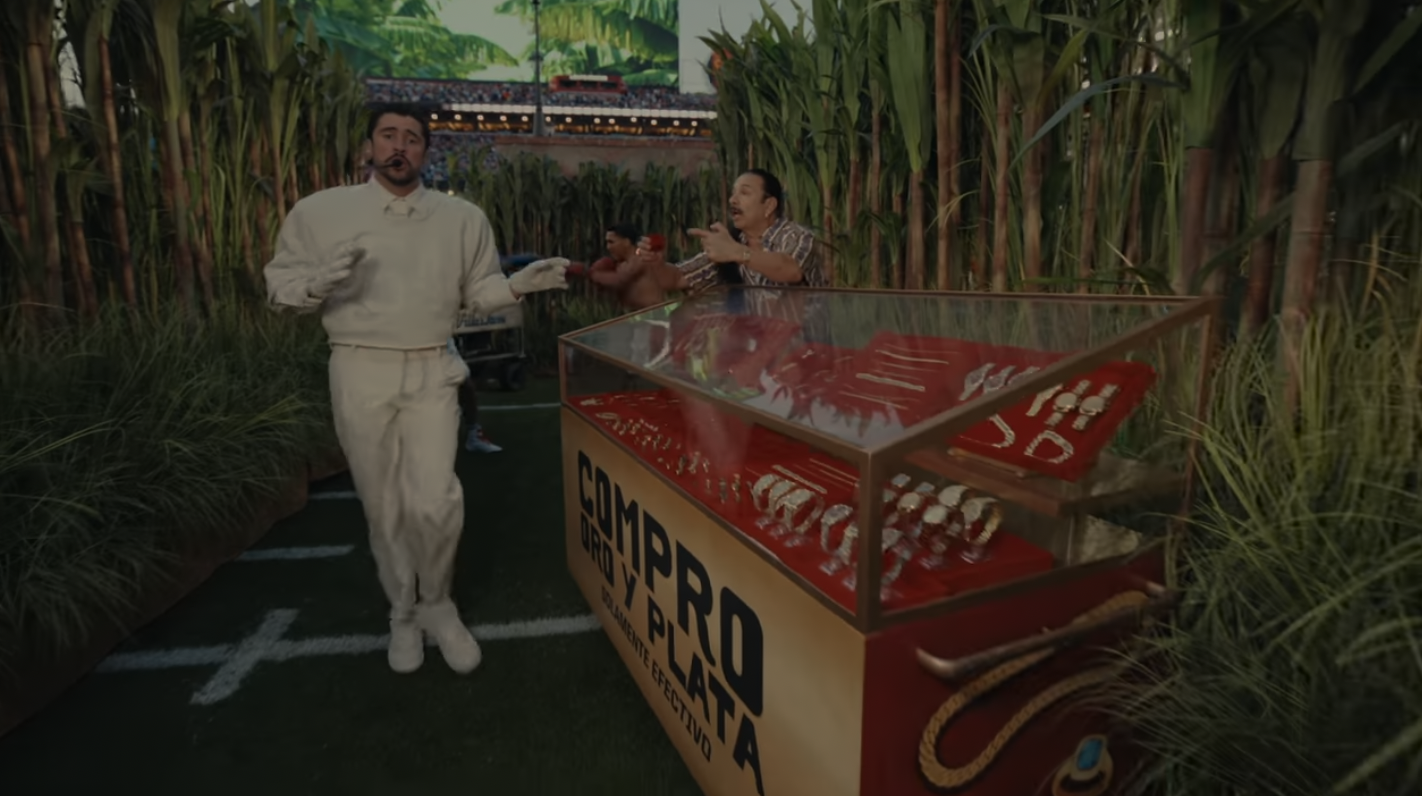
Bad Bunny opens the show in a sugar cane field.
Sugar powered Puerto Rico’s colonial economy – first under Spain (enslaved labor), then under U.S. control after 1898 when American sugar corporations moved in.
(Colonial extraction)
(Profits flowing off the island)
Next…
A walk through Puerto Rico, daily life, the island as it is, pride, culture
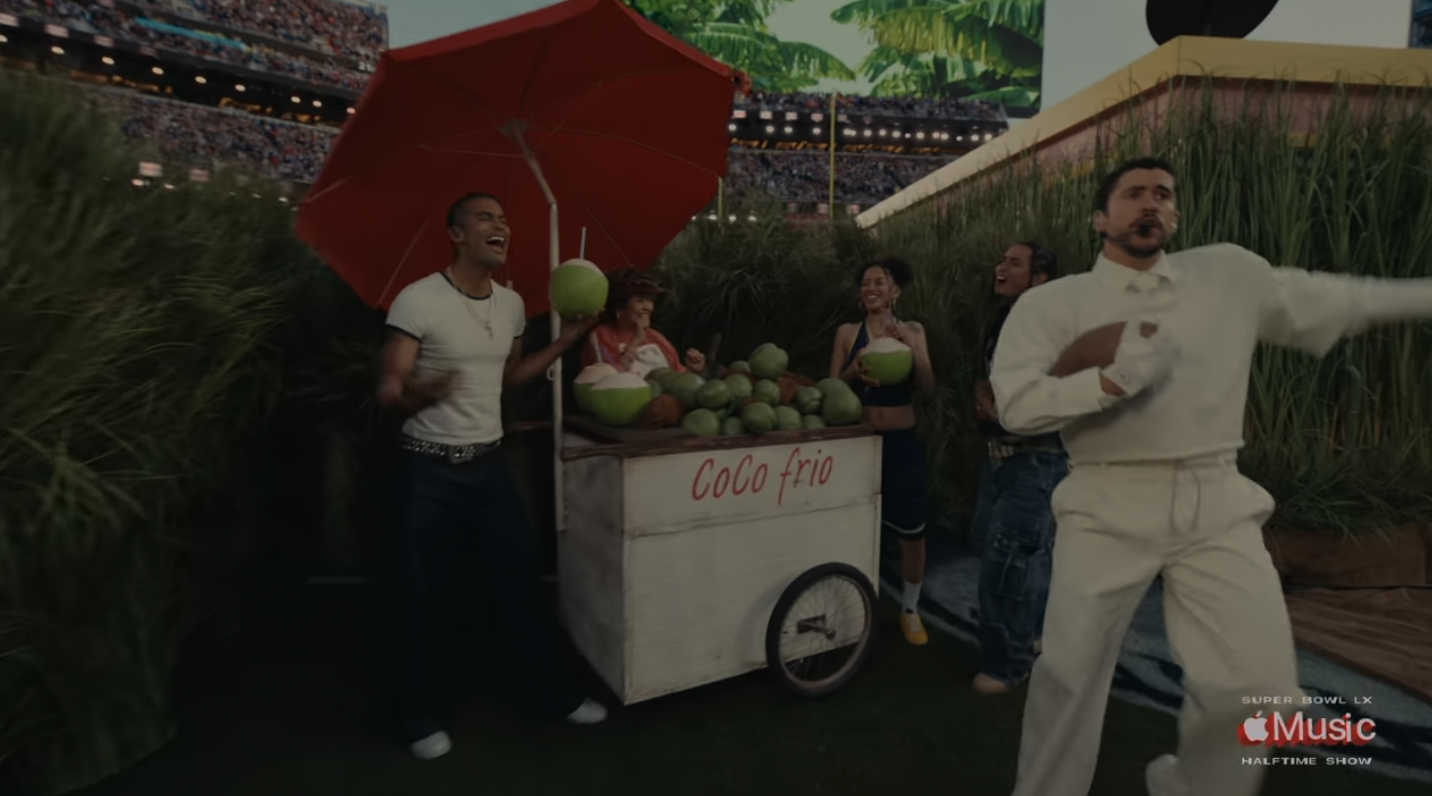
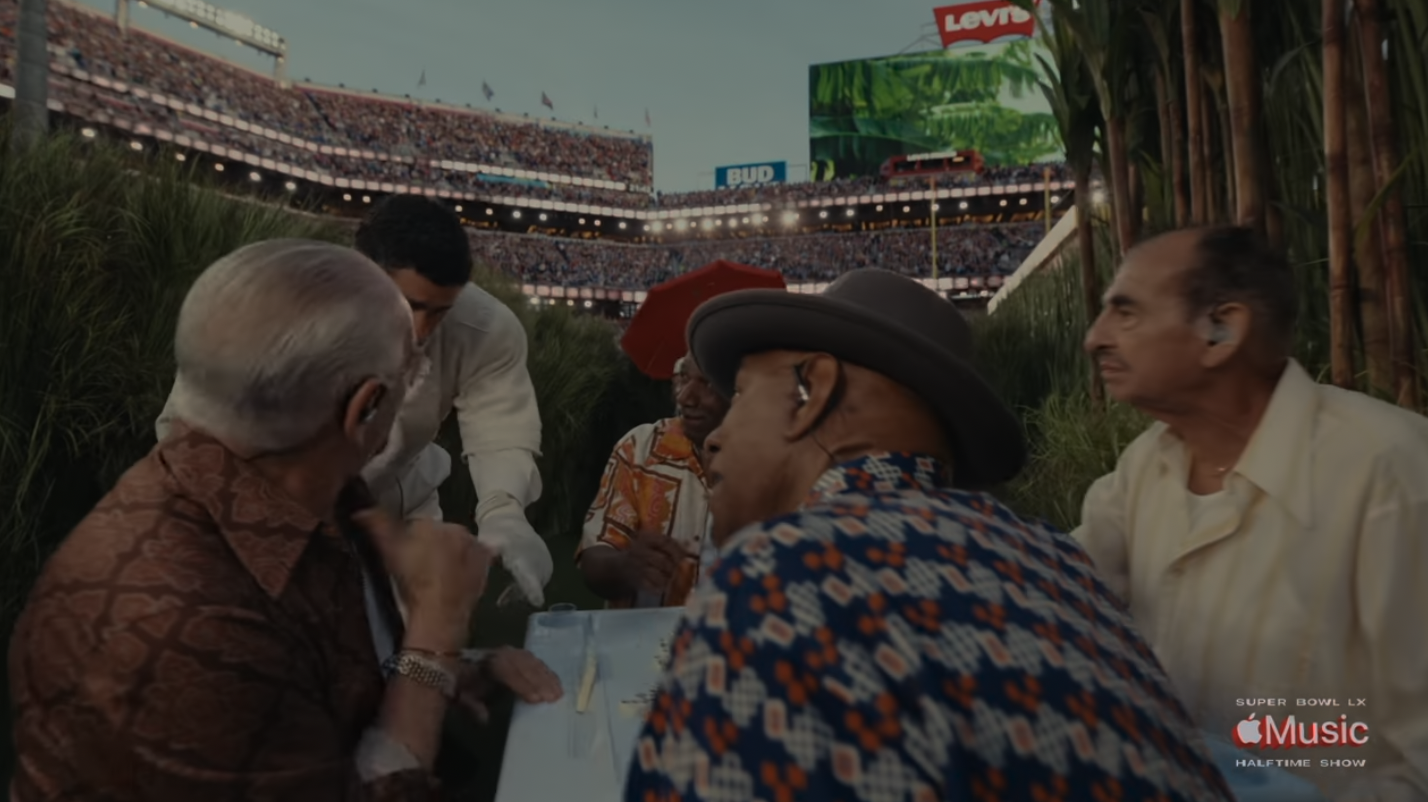
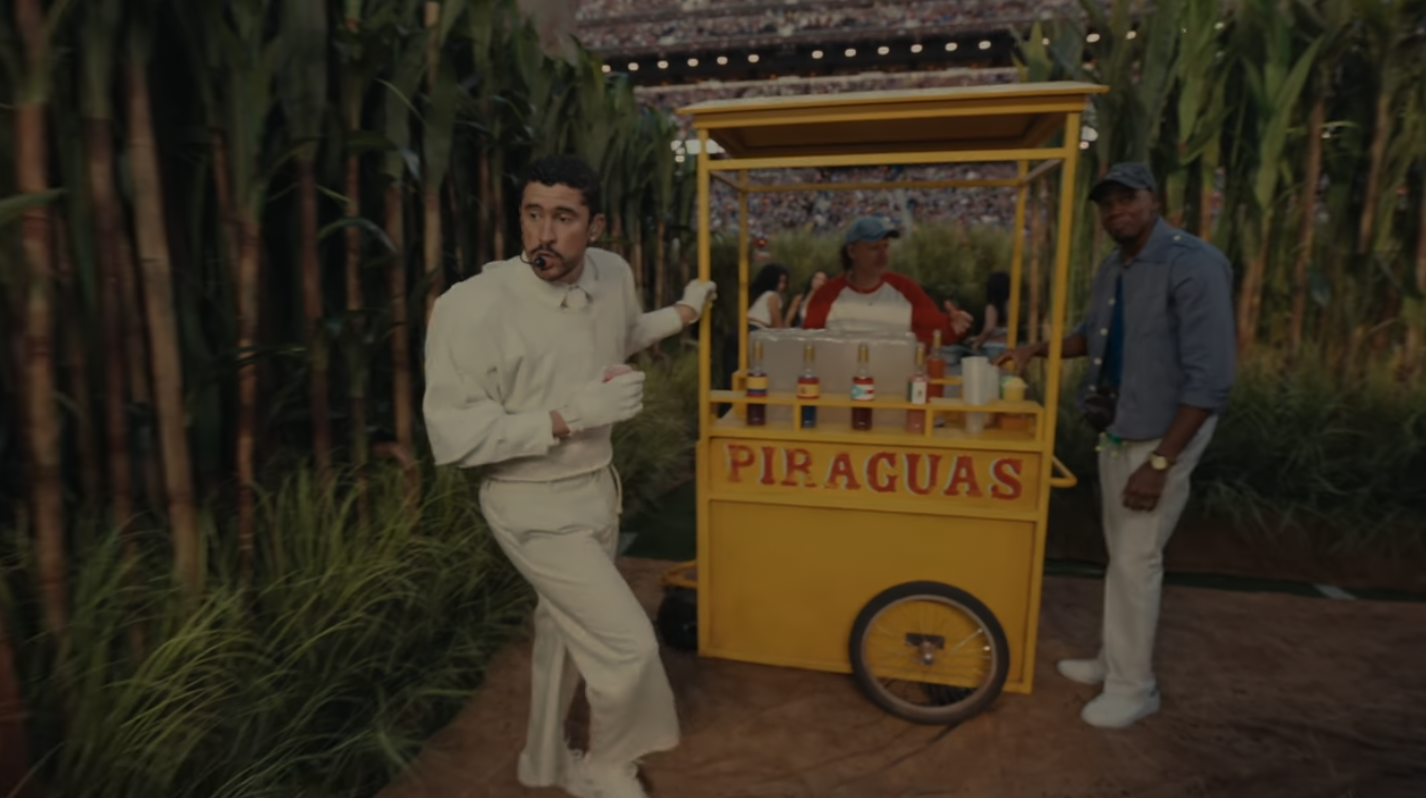
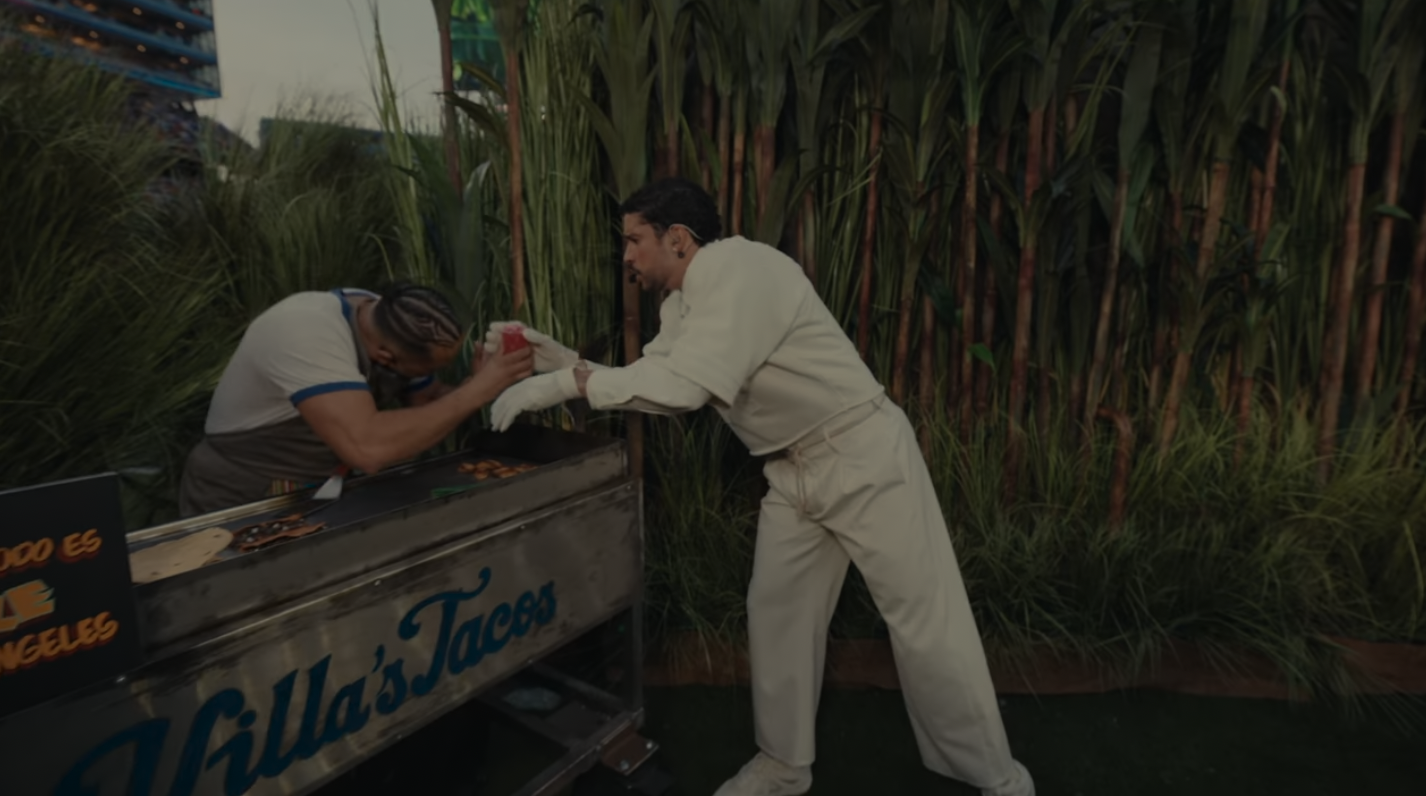
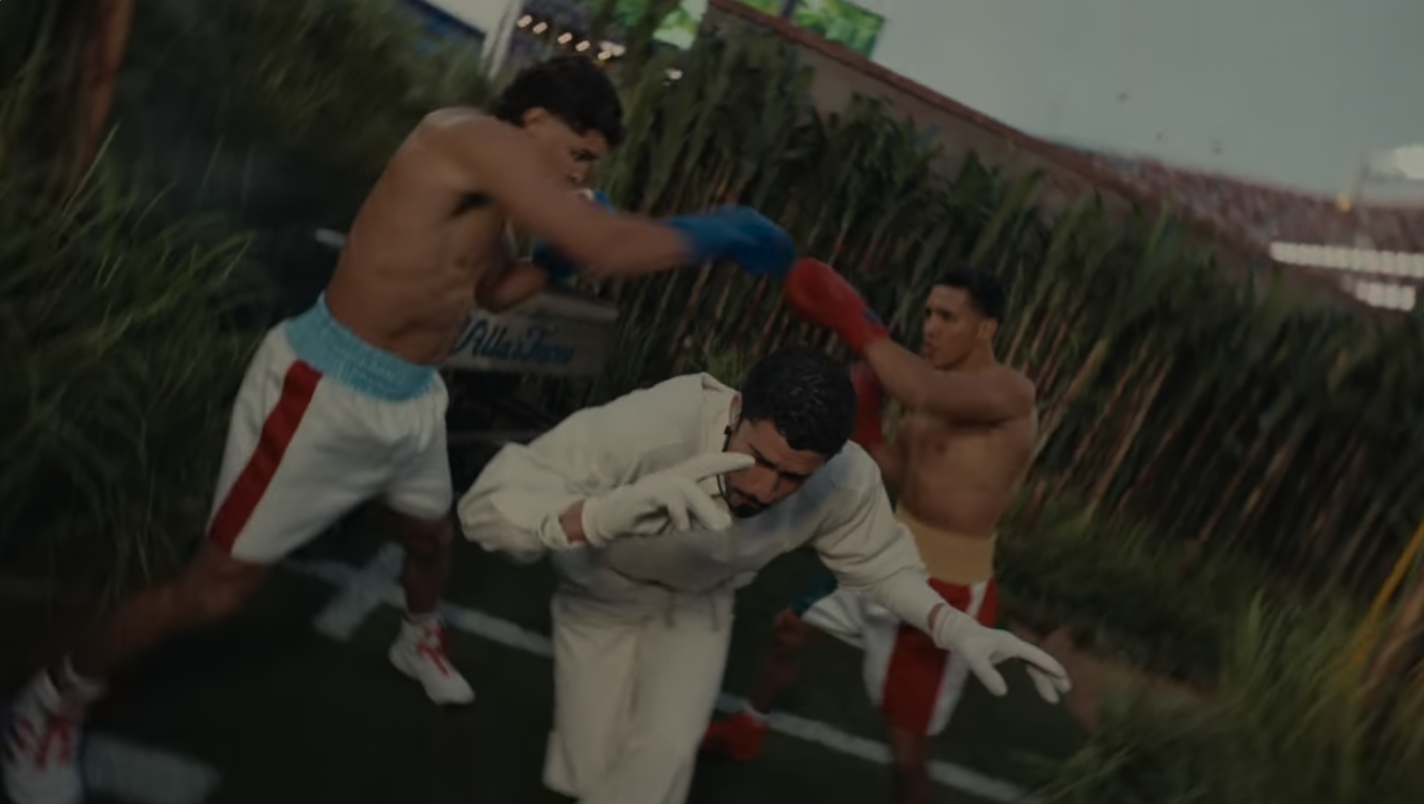
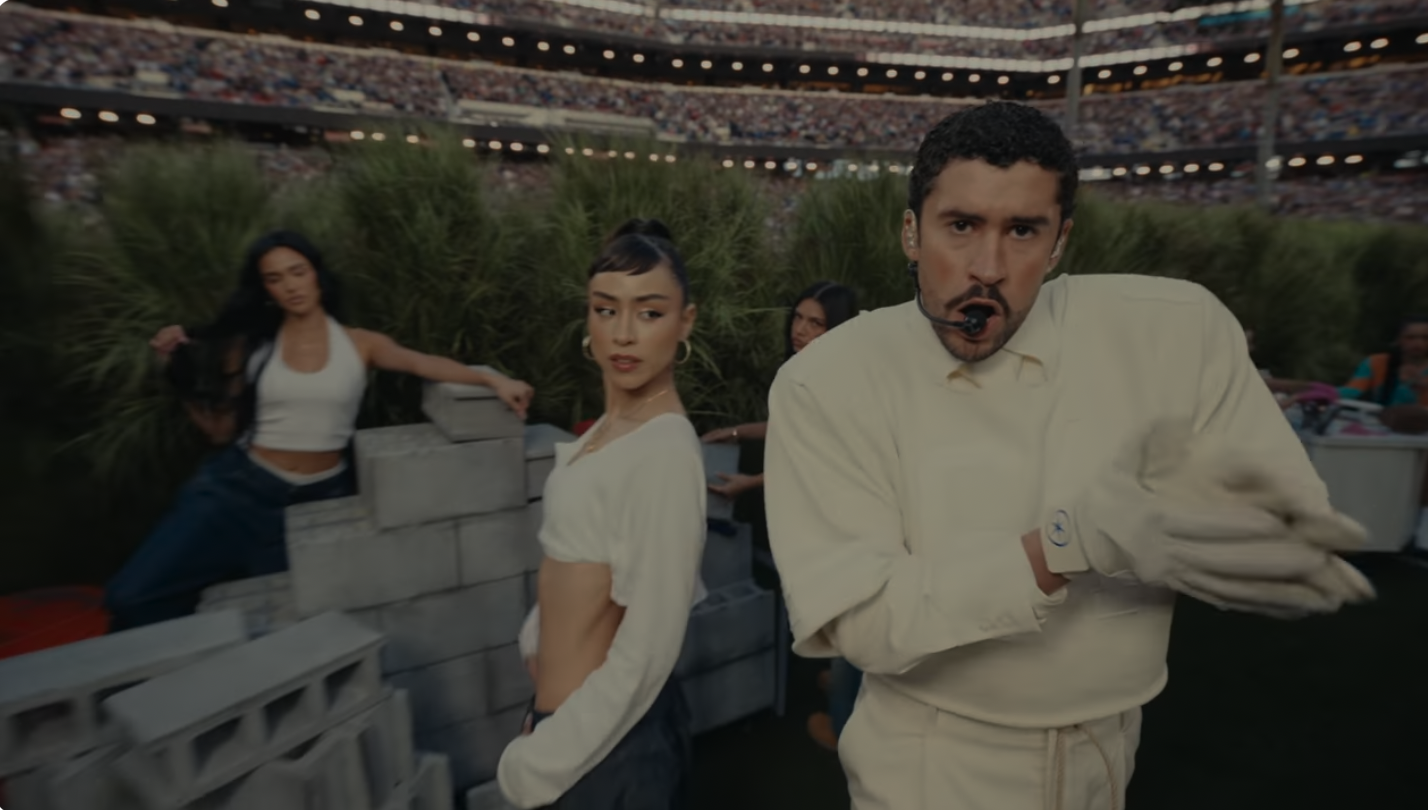
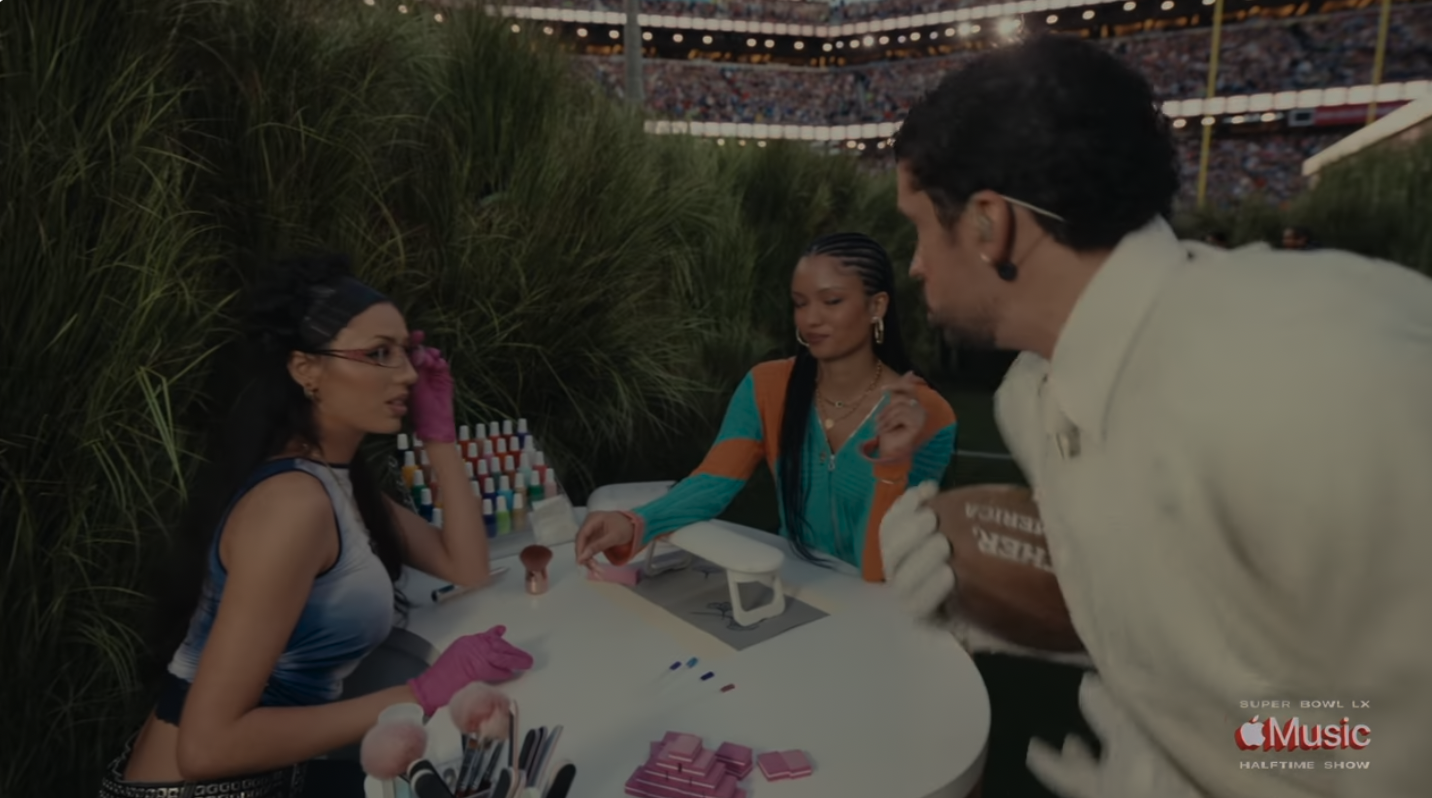
No Me Quiero Ir de Aquí Residencia y La Casita
(I Don't Want to Leave Here Residency and the little house)
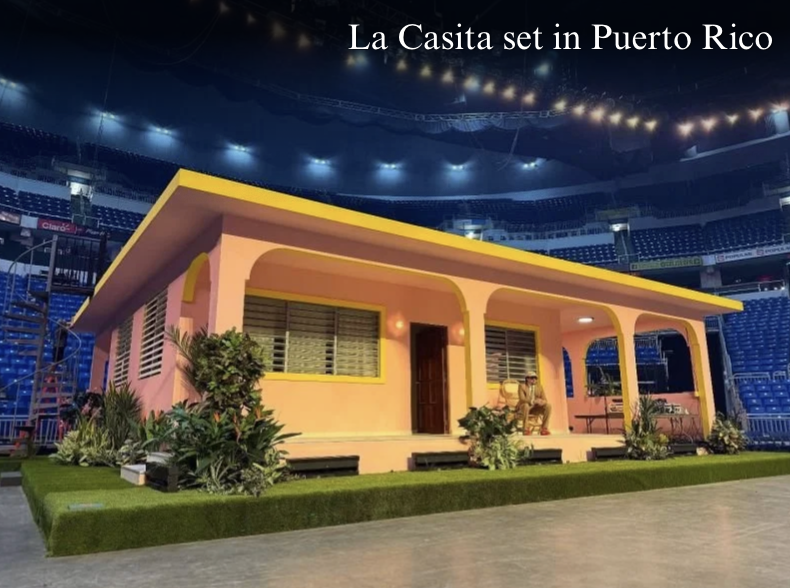
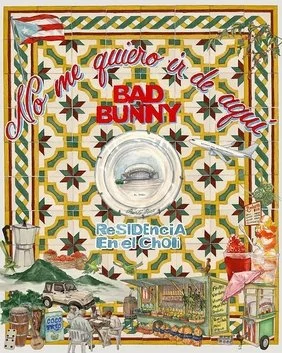
After a massively successful album, he could’ve launched an equally massive U.S. tour. Instead, he did a 30-show residency in Puerto Rico called “No Me Quiero Ir de Aquí” (I don’t want to leave here). With a predominantly Latino fan base, he kept the show rooted safely at home. Community first.
La Casita debuted during his residency as a full Puerto Rican home built into the stage. A tribute to neighborhood life. He turned the residency into a barrio (a neighborhood block party), then brought that barrio to the Super Bowl.
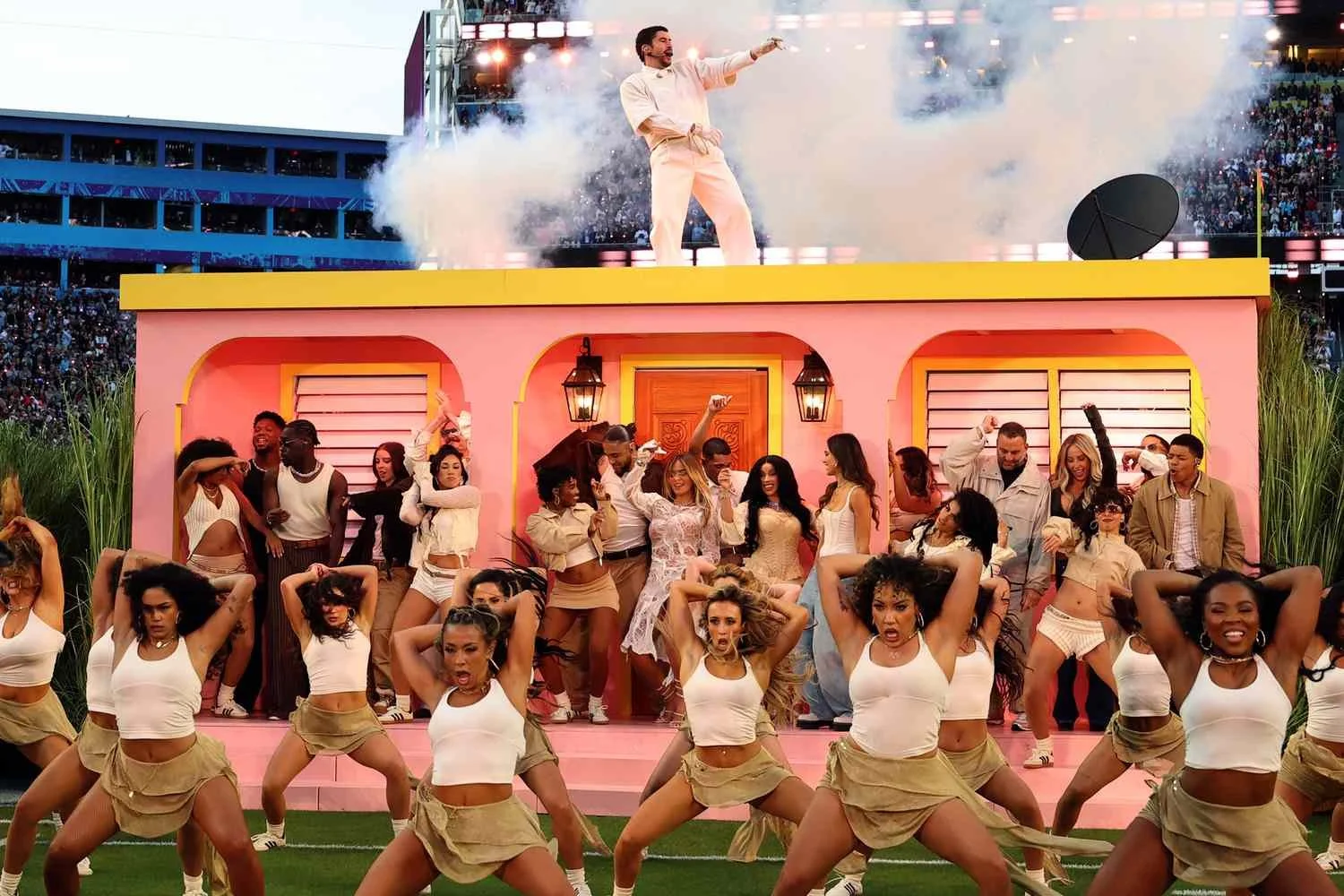
La Casita @ the Super Bowl
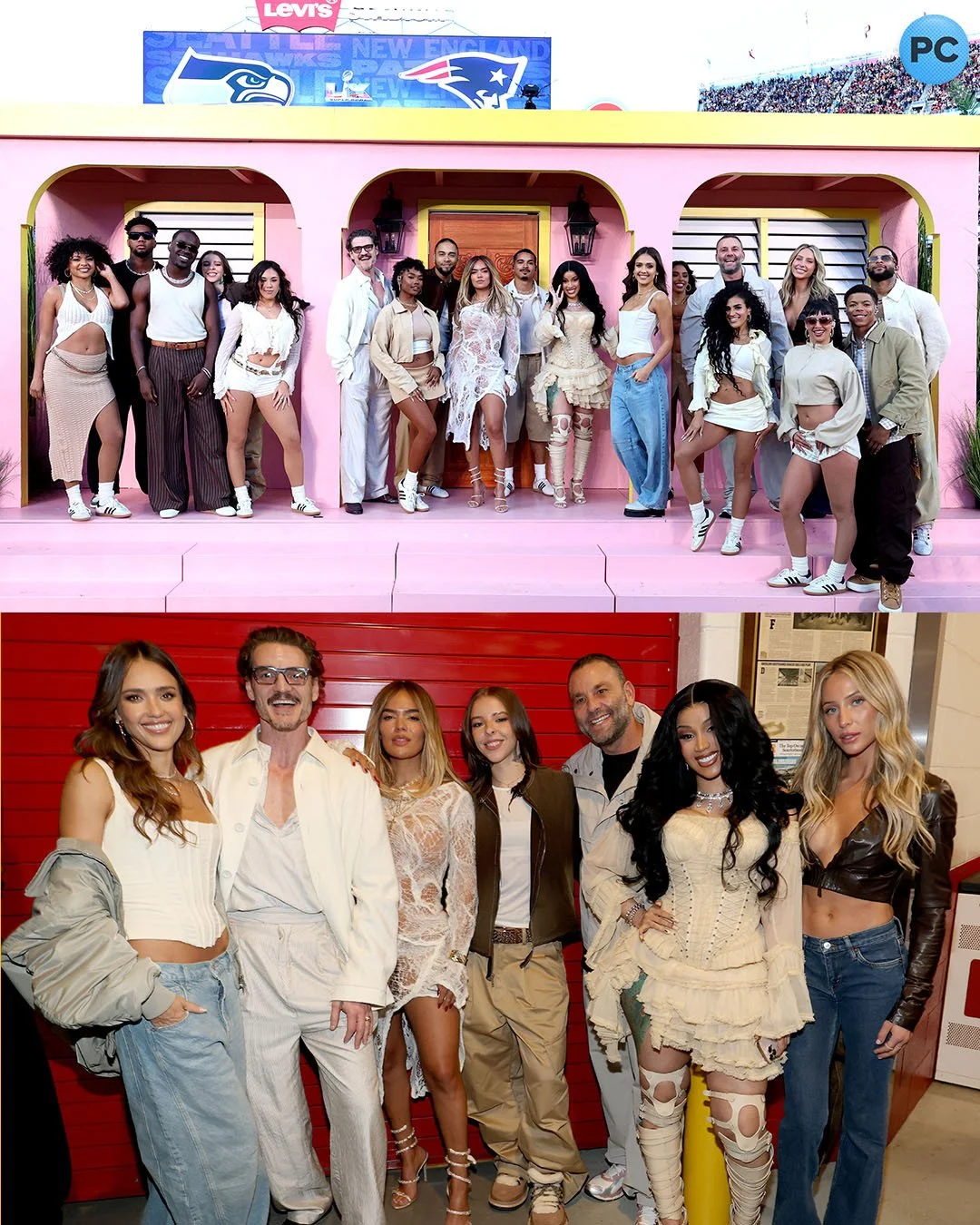
Celebs spotted at La Casita:
Jessica Alba (Mexican American Actress), Pedro Pascal (Chilean actor), Karol G (Colombian superstar), Young Miko (Puerto Rican rapper), David Grutman (Miami-based hospitality entrepreneur), Cardi B (Dominican American rapper, Alix Earle (New Jersey influencer…), and Ronald Acuña Jr. (Venezuelan MLB player)
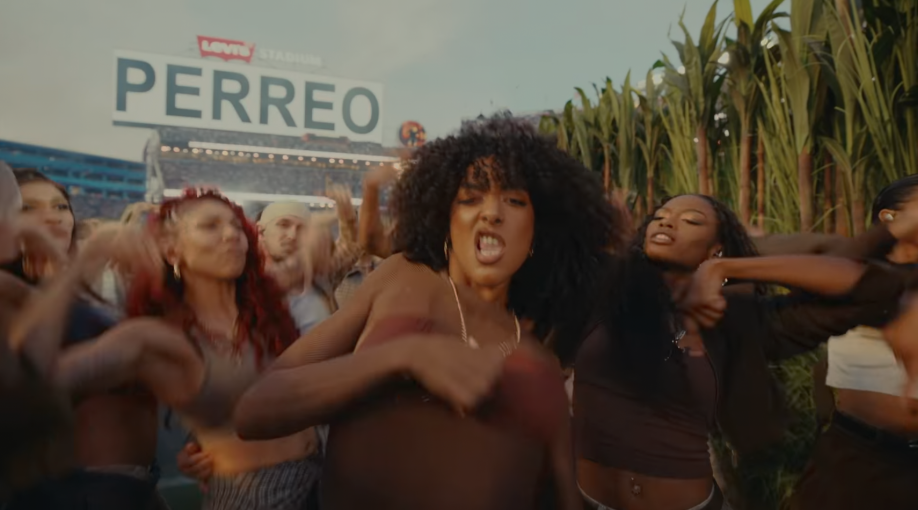
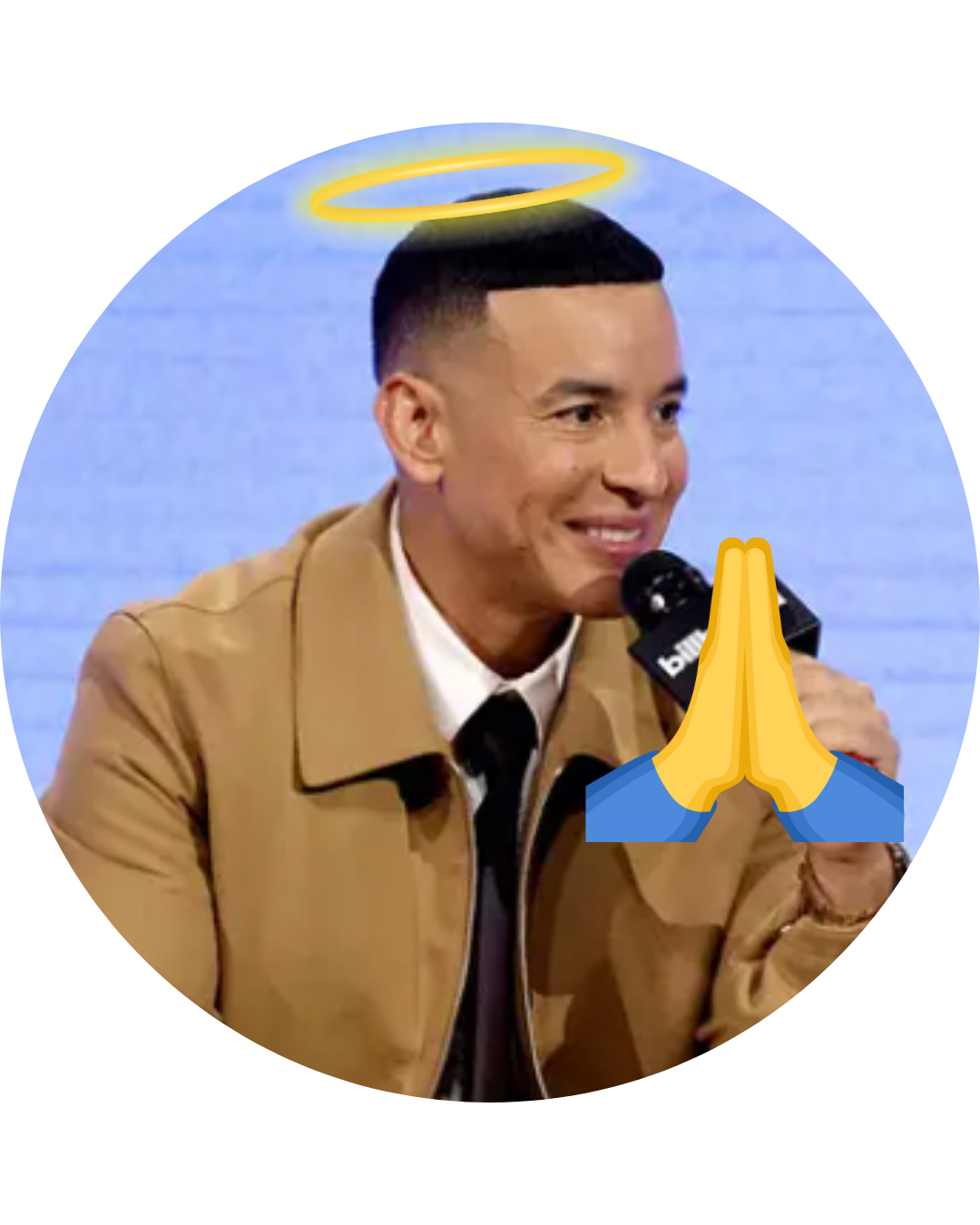
There was a snippet of Daddy Yankee’s “Gasolina” (the reggaeton anthem), but Daddy Yankee has found God and retired perreo (reggaeton sweat adjacent grinding)… for the lord. BUT he did comment, “I’m on a different mission right now… even though I respect what he’s doing right now. Don’t get me wrong. Benito is an ally.”
“Esto es música de Puerto Rico. Esto es música de caserío.”
This is Puerto Rican music. This is music from the projects.
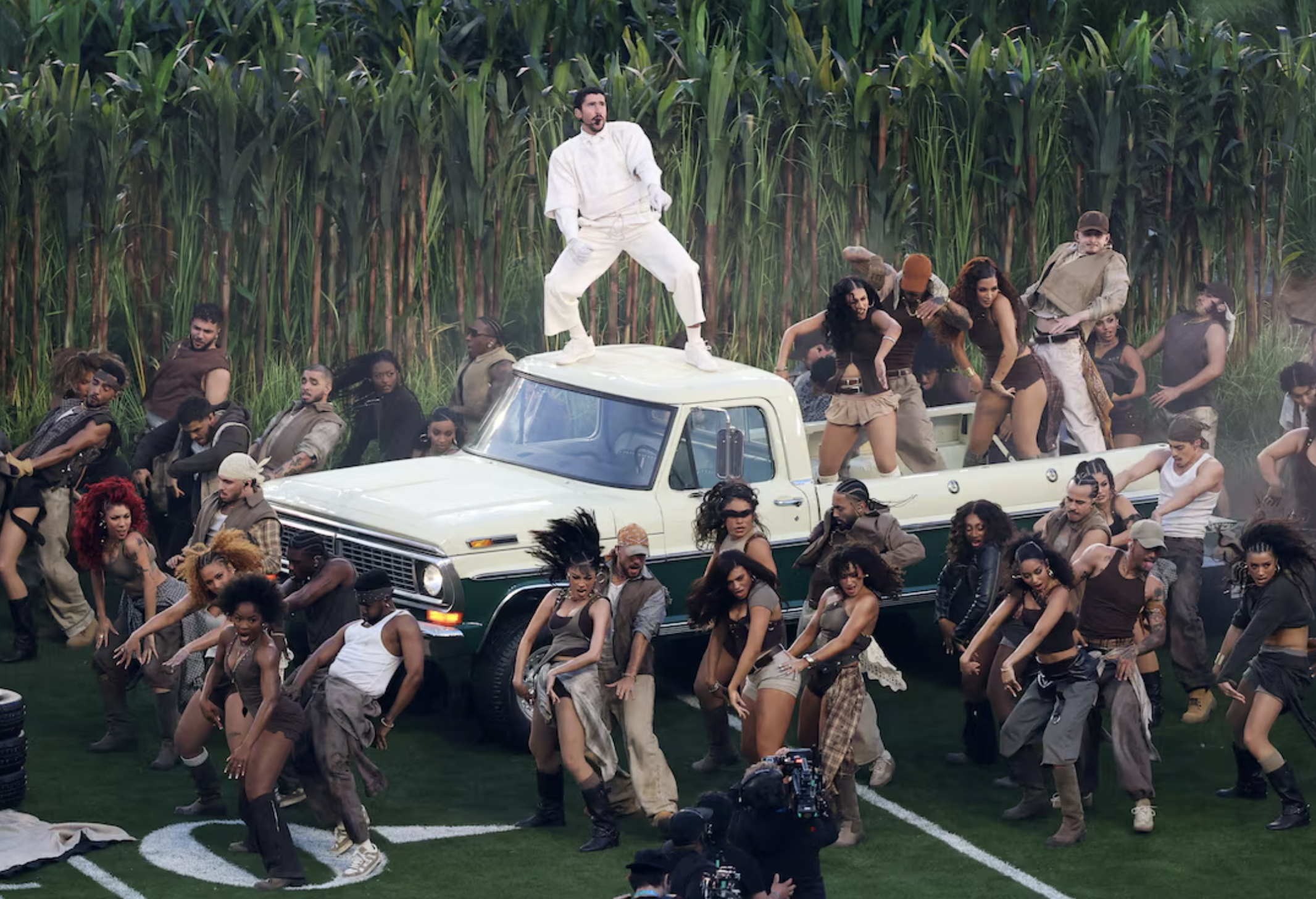
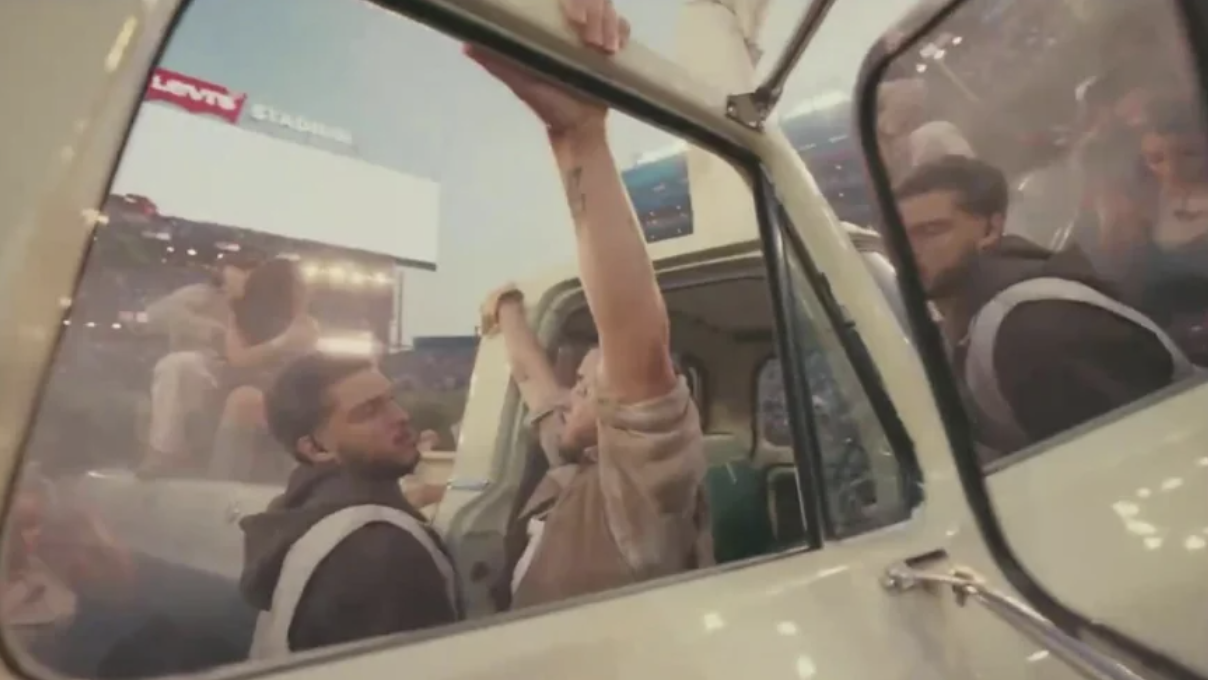
Caserío = public housing communities in Puerto Rico. Government-built, low-income housing complexes, cultural incubators, reggaeton’s birthplaces of reggaeton and trap.
two male dancers grinding on each other!!!
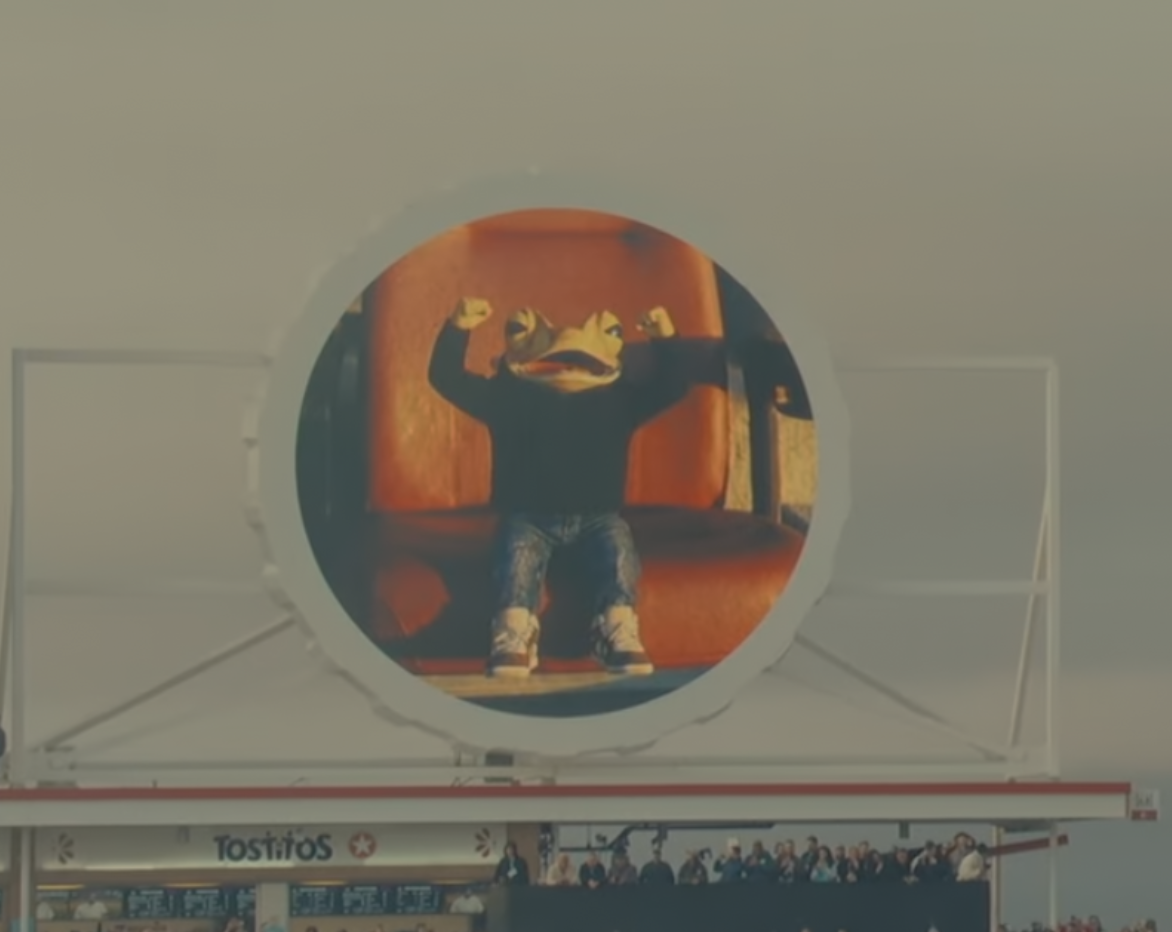
el coquí
Puerto Rico’s tiny tree frog: loud at night, impossible to ignore, A symbol of the island, of home, of resilience. Native. Persistent. The coquí shows up in Bad Bunny’s visuals
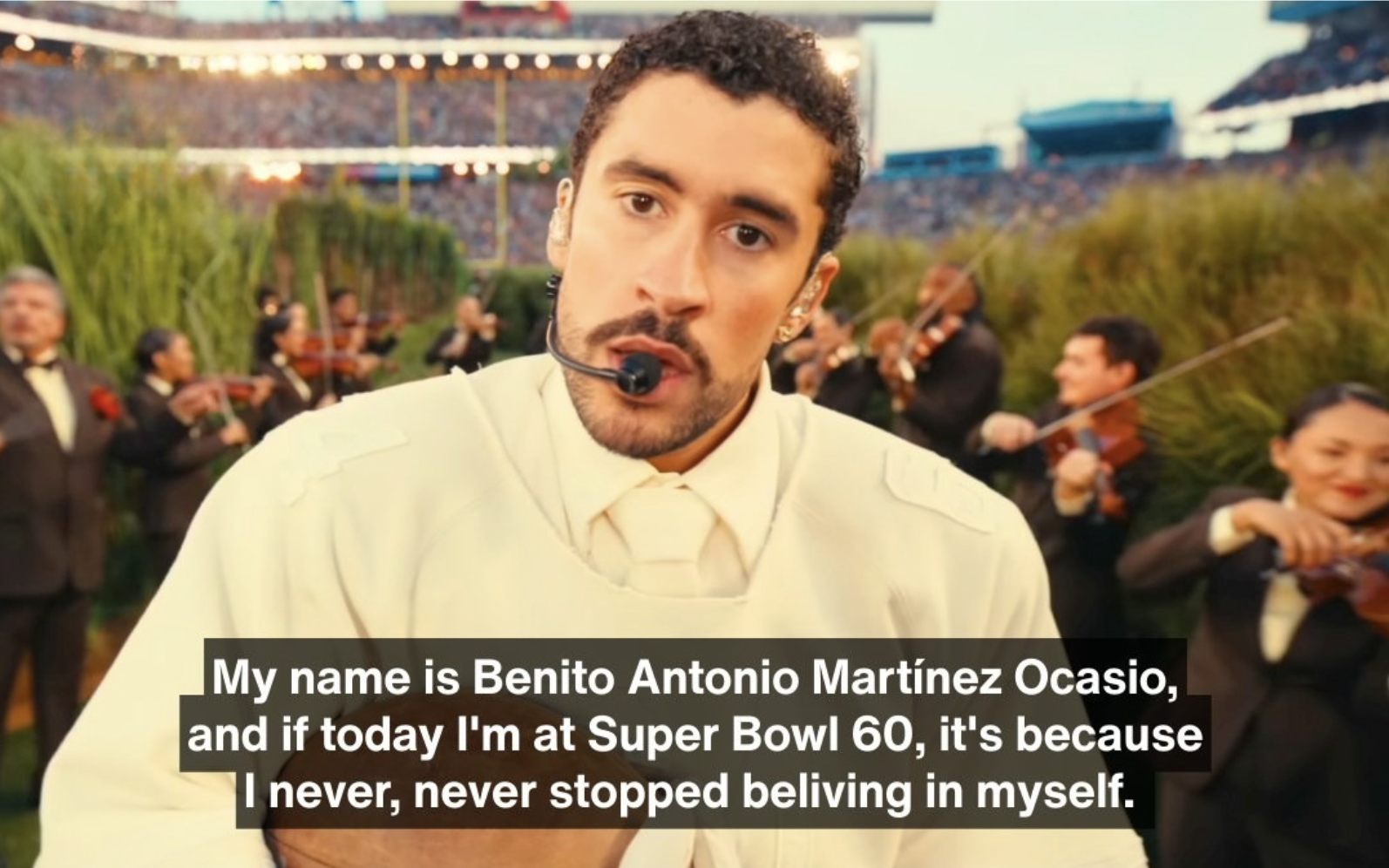
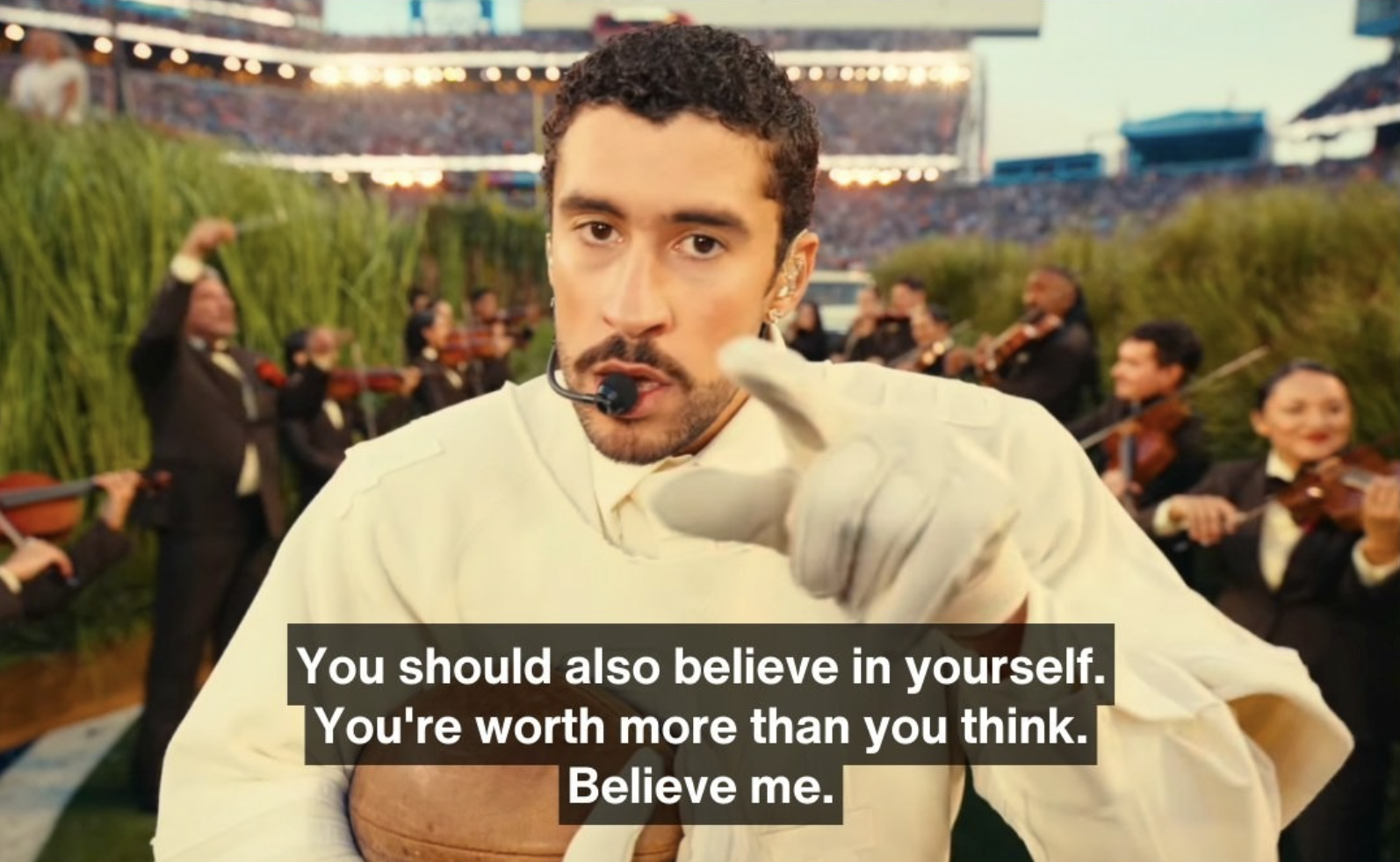
White girl alert!!!!!!….
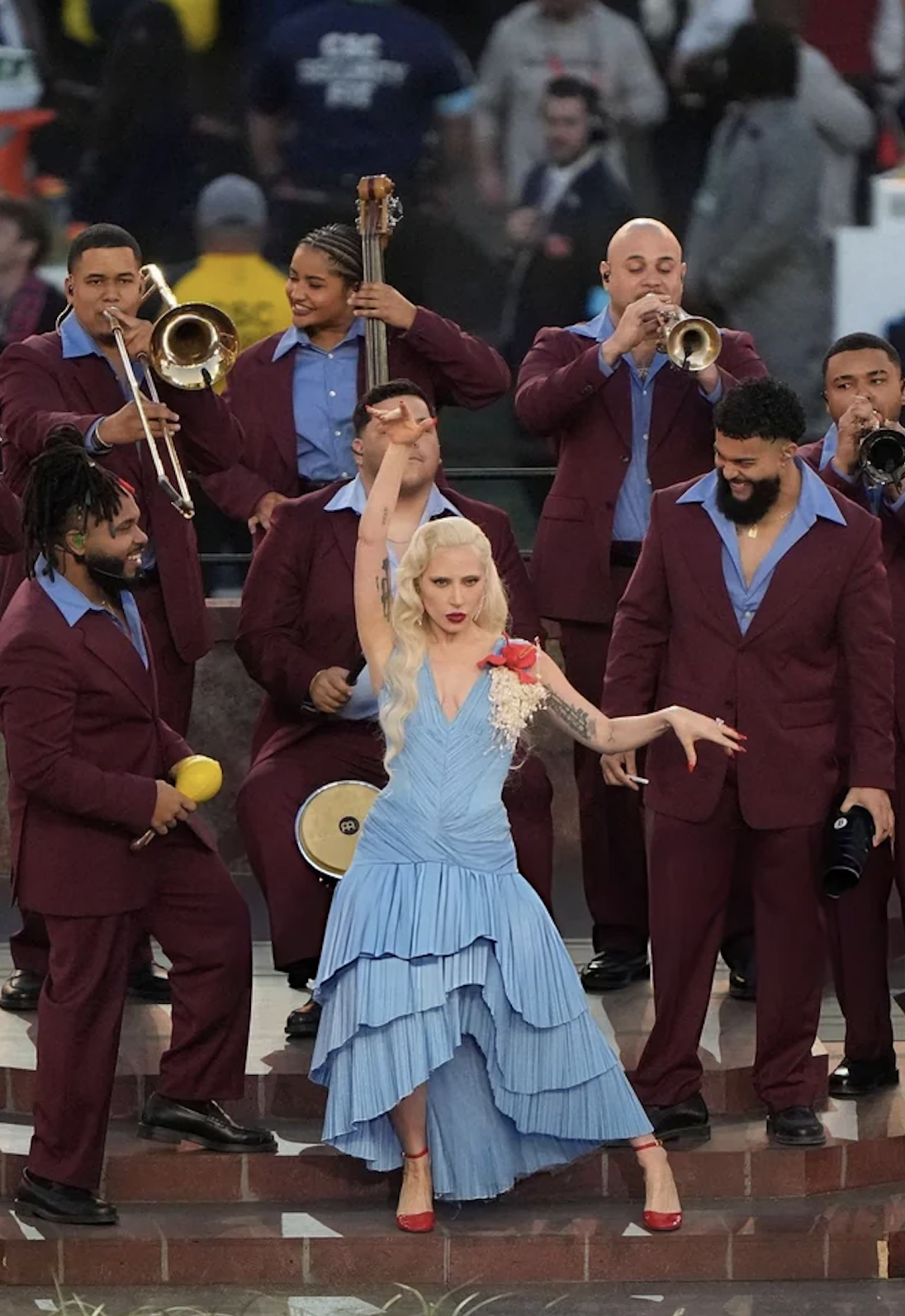
If there must be a white girl on this almost entirely Hispanic stage, let it be the one who built her career on inclusivity. Decades of allyship. Mutual admiration with Benito. A loud, visible, consistent supporter of marginalized communities.
Lady Gaga joined Los Sobrinos (the Puerto Rican salsa band that worked with Bad Bunny on DTmF) for a salsa version of “Die With a Smile” - a wedding anthem, performed during a real hispanic wedding.
She wore a custom light blue Luar dress (designed by Dominican-American designer Raul Lopez) with red flor de maga, Puerto Rico’s national flower. (colors of the Puerto Rican flag)
Gaga, an Italian-American New Yorker on a Puerto Rican stage singing salsa.
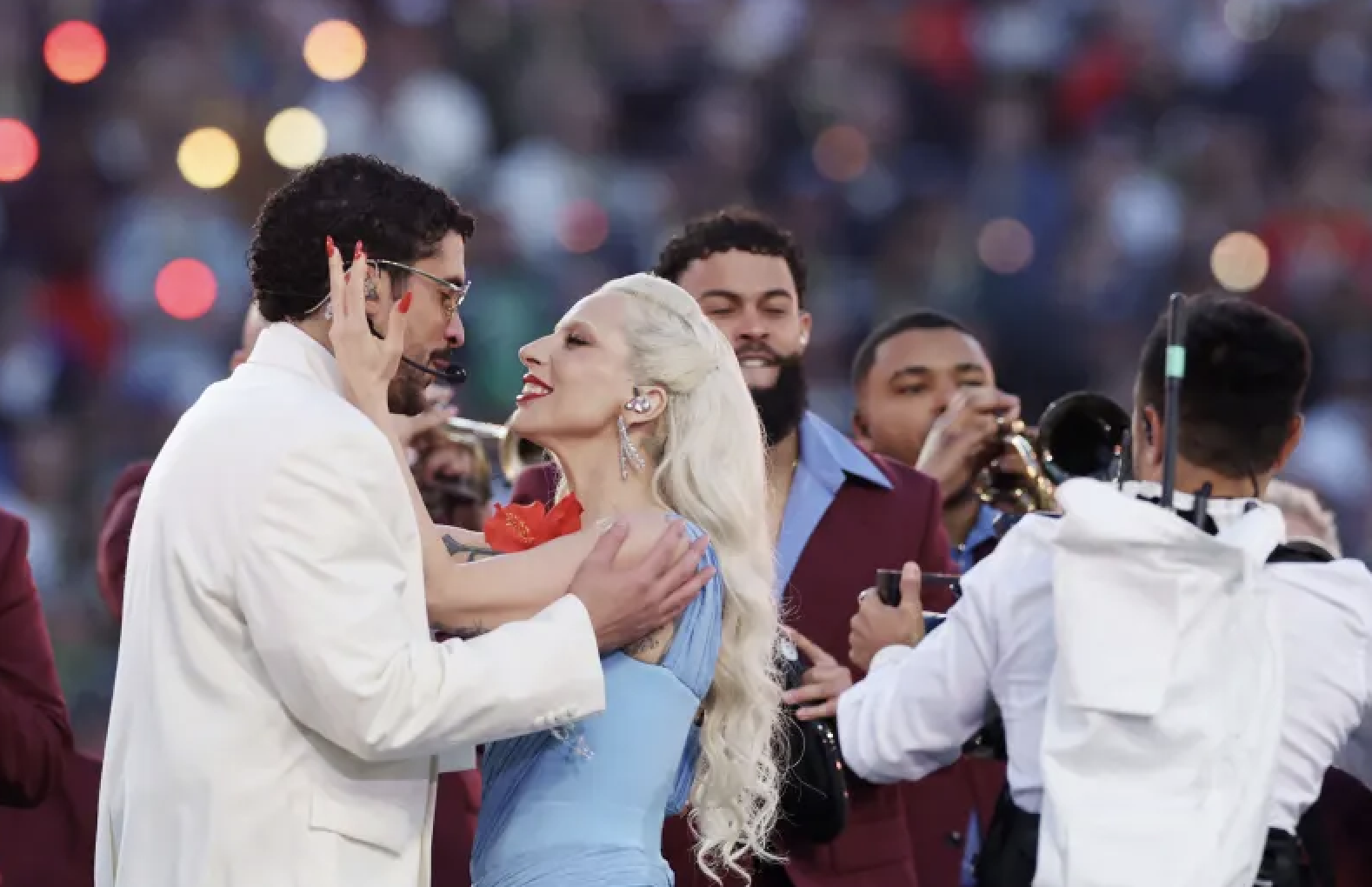
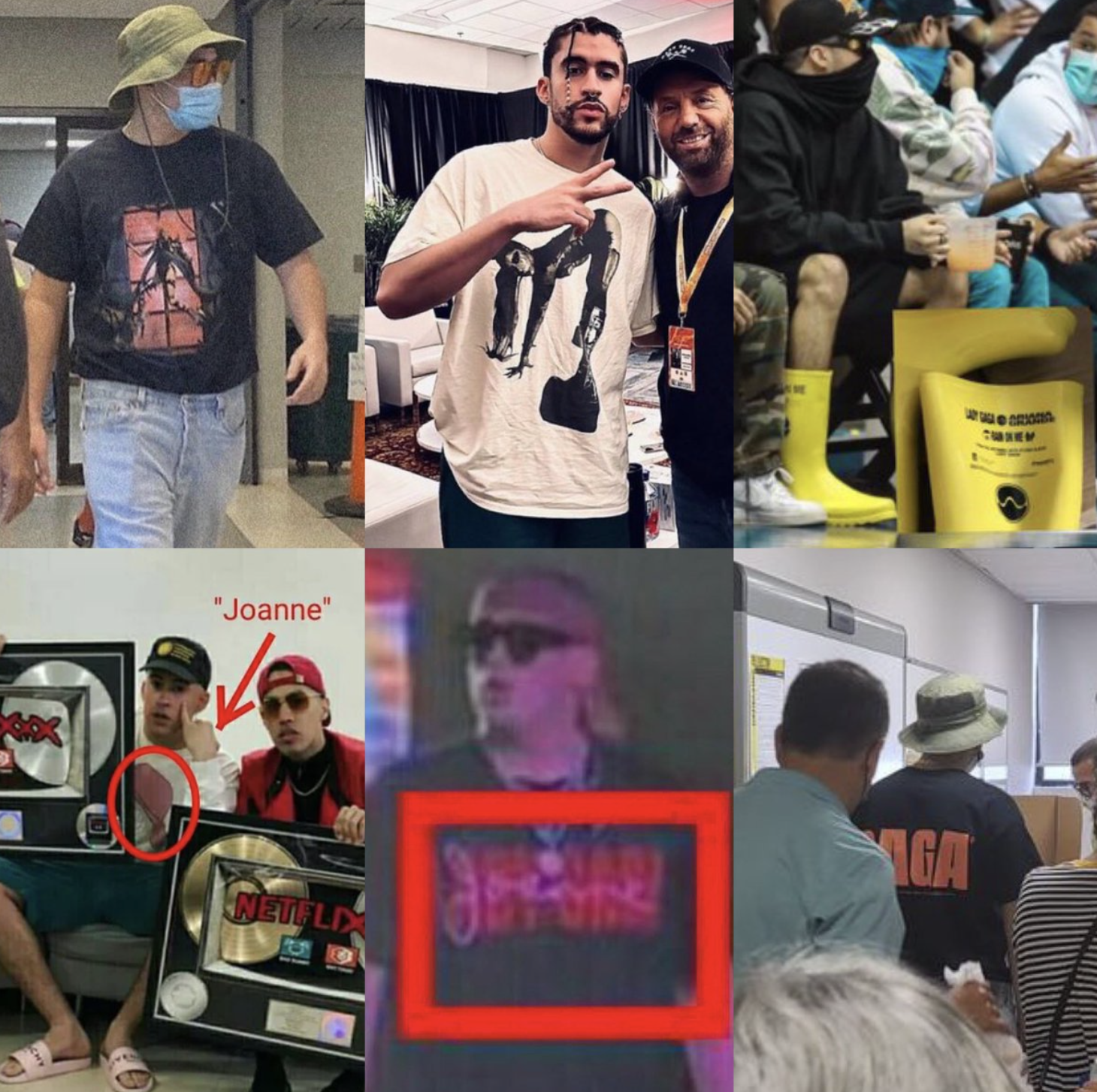
(pequeño monstruo= little monster = lady gaga’s fanbase name)
Pequeño Monstruo solidarity!!!!
Benito has been repping Gaga for years:
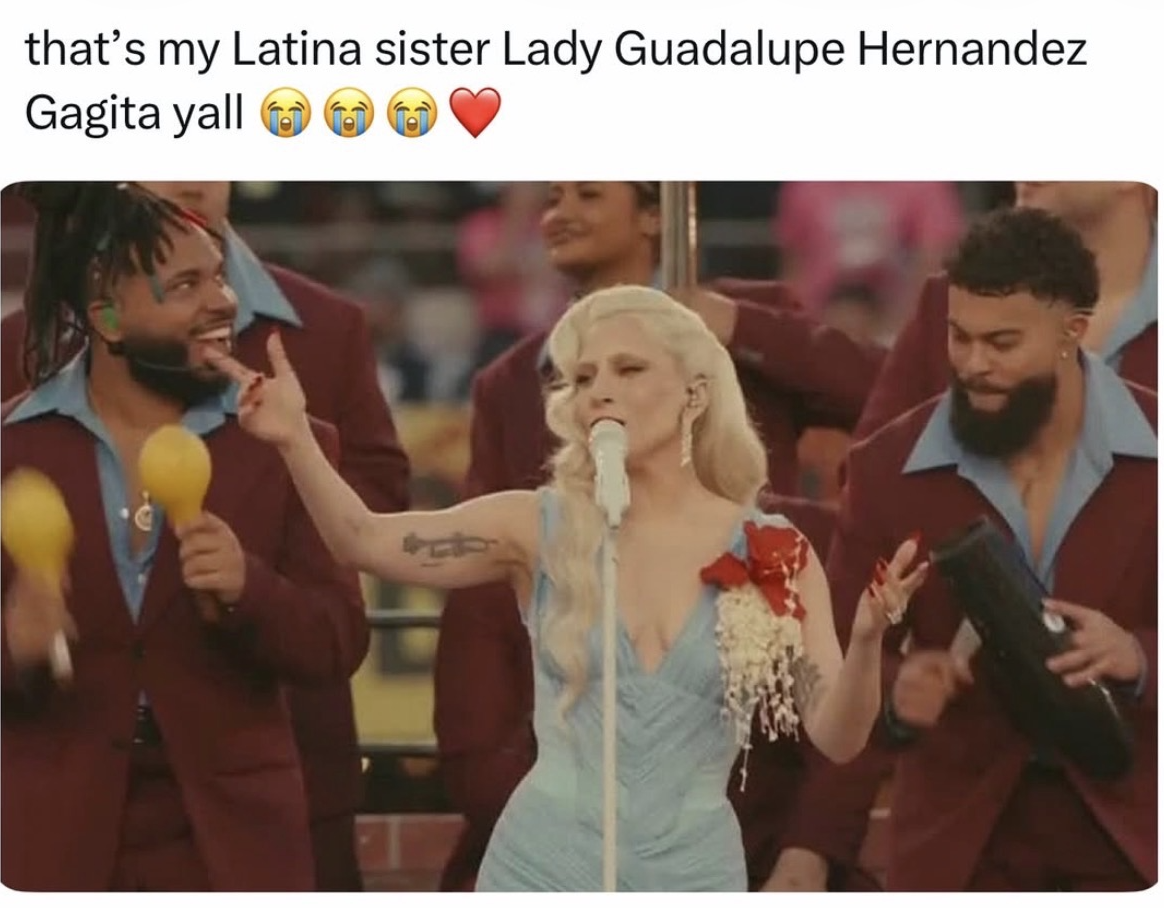
Togetherness! Vamos Gagita!!!!!
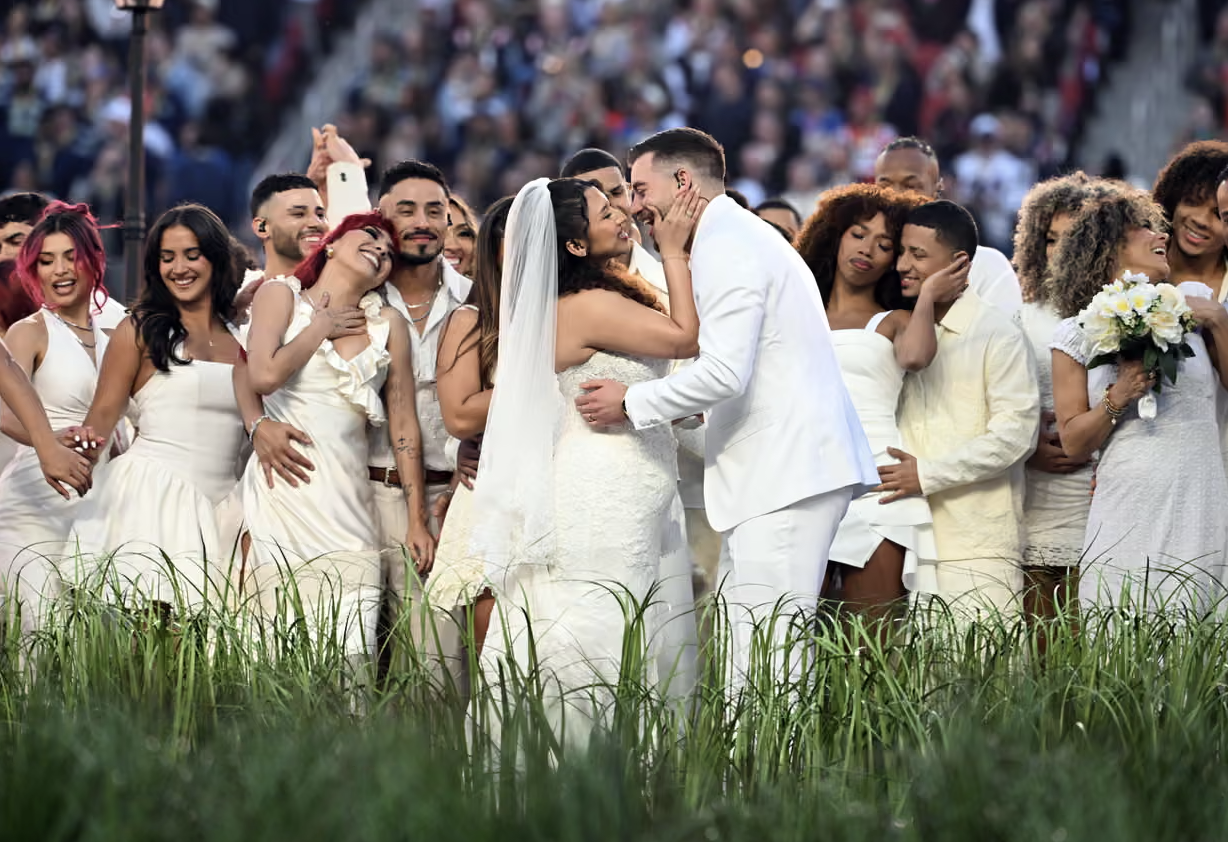
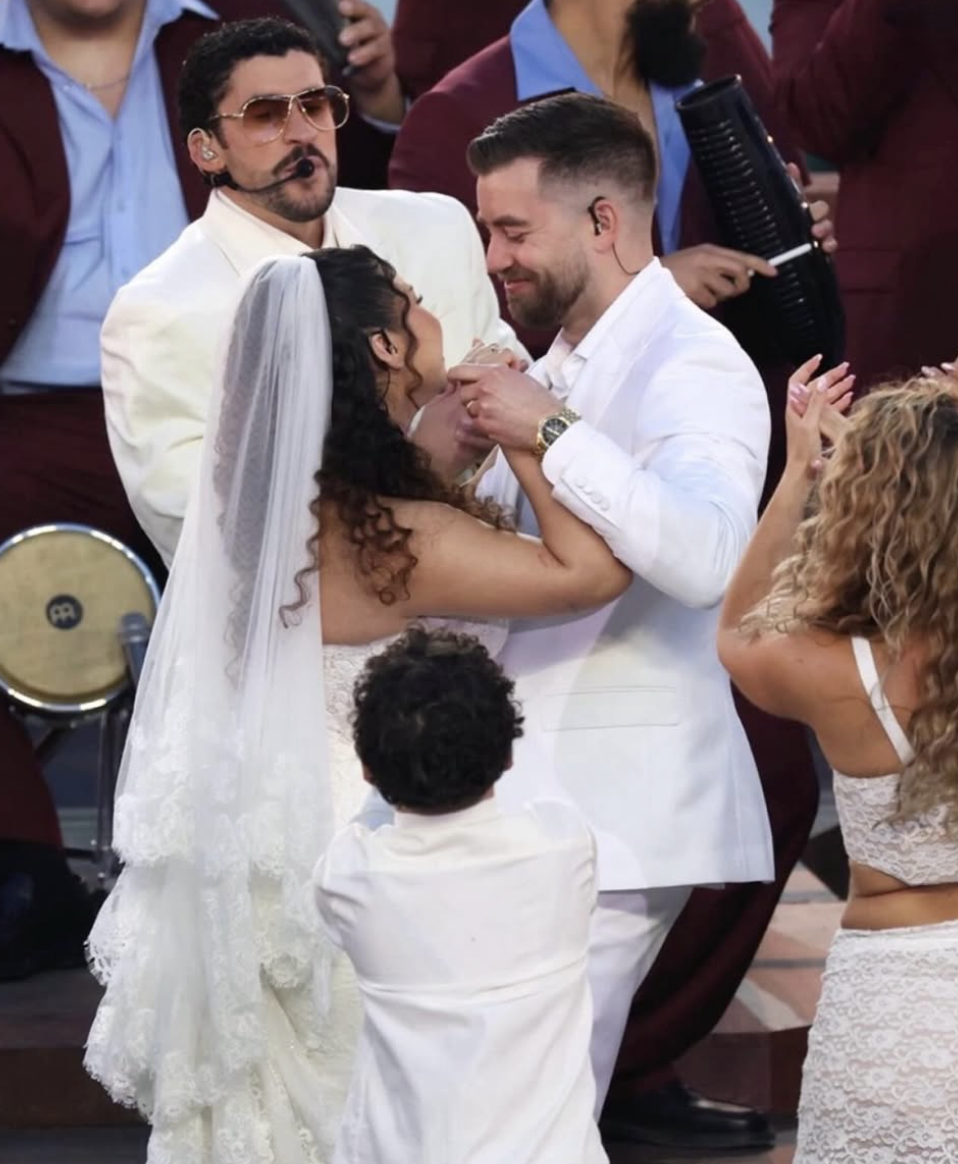
Elli Aparicio and Tommy Wolter invited Bad Bunny to their wedding. Instead, he invited them to get married at the Super Bowl. A real officiant declared them married on the field.
A real wedding!!!!!
A culturally accurate wedding: multi-generational, dancing, chaos, love…
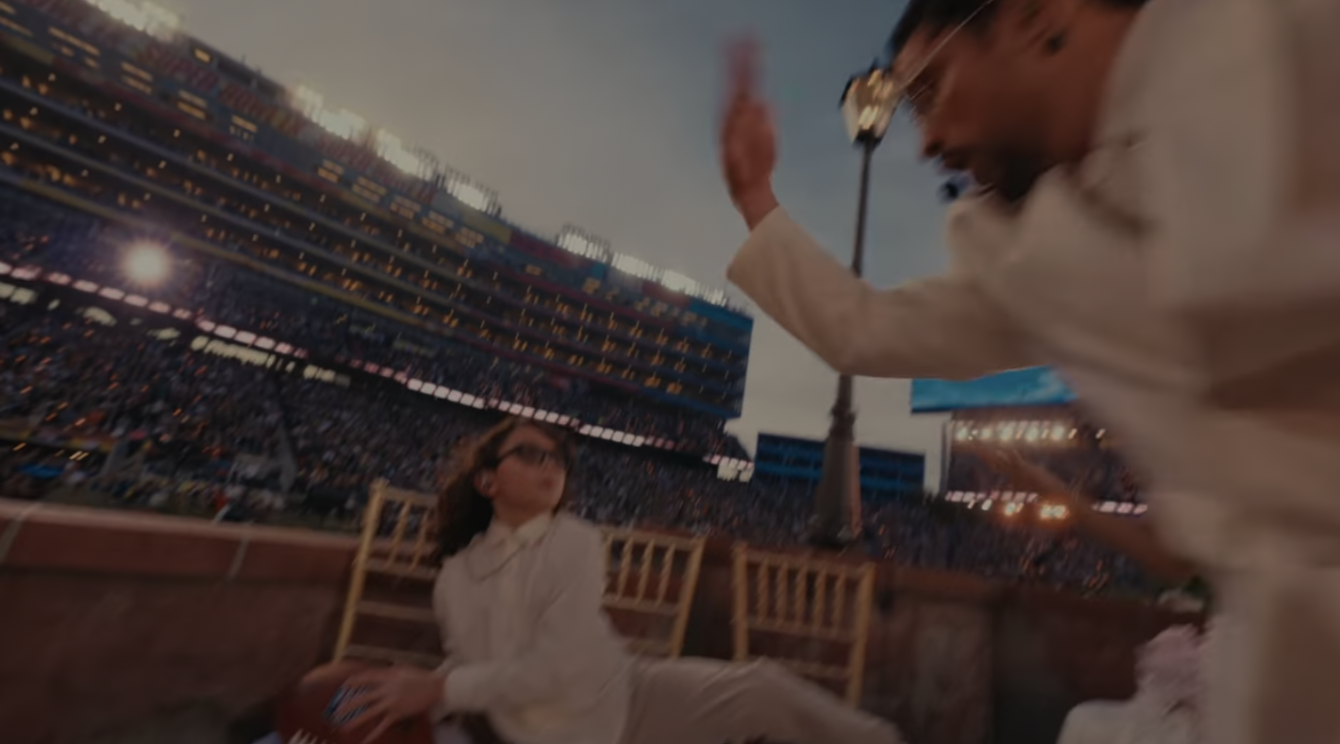
… and someone’s nephew passed out on a set of chairs <3
“Baila sin miedo. Ama sin miedo.”
Dance with no fear. Love with no fear.
Take up space. Love openly. Celebrate!!!!
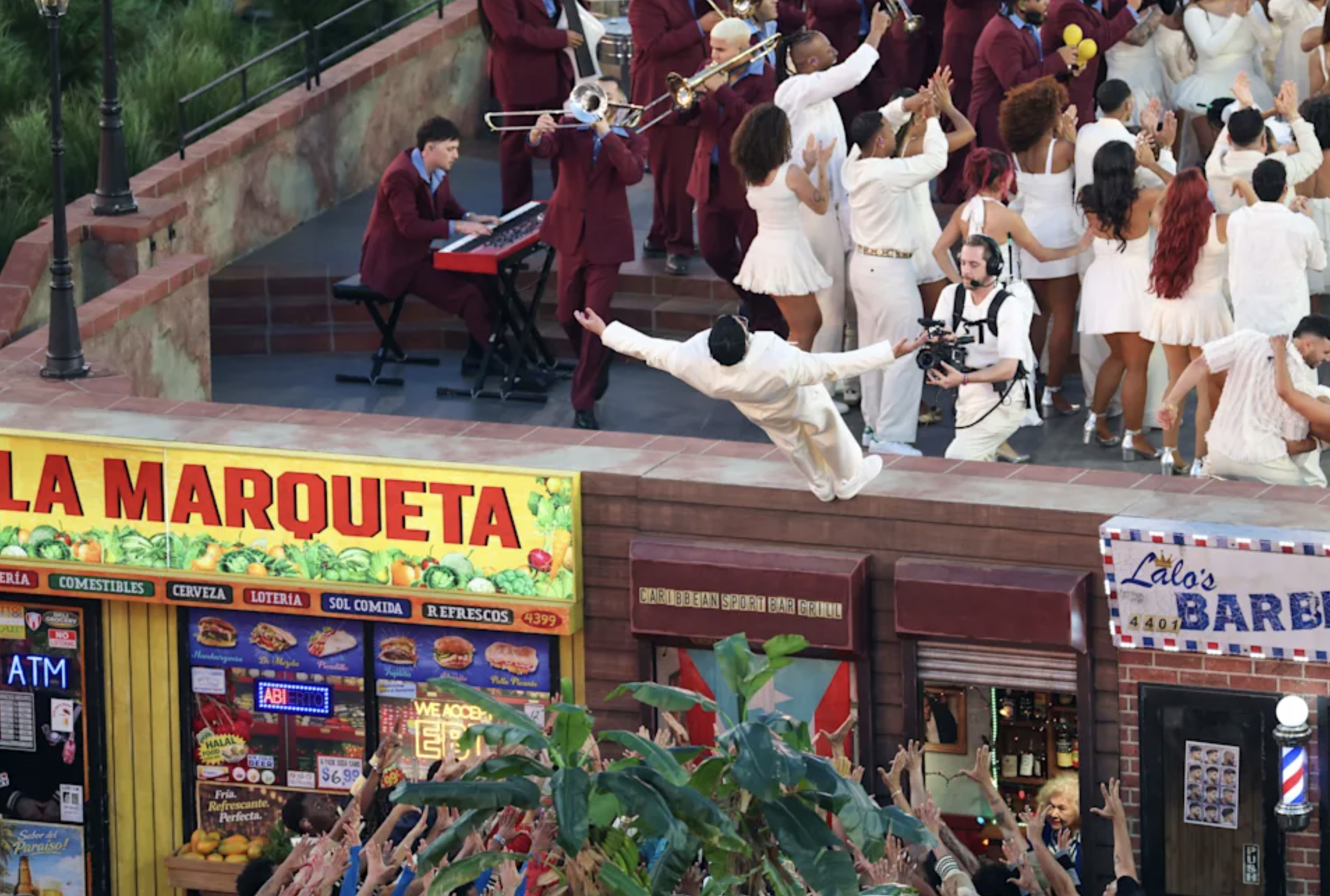
NUEVAYoL
Puerto Rican diaspora in New York: barber shops, bodegas, clubs, Boricua culture on the mainland
a love letter to the communities that kept the music, the slang, the culture alive even after leaving the island.
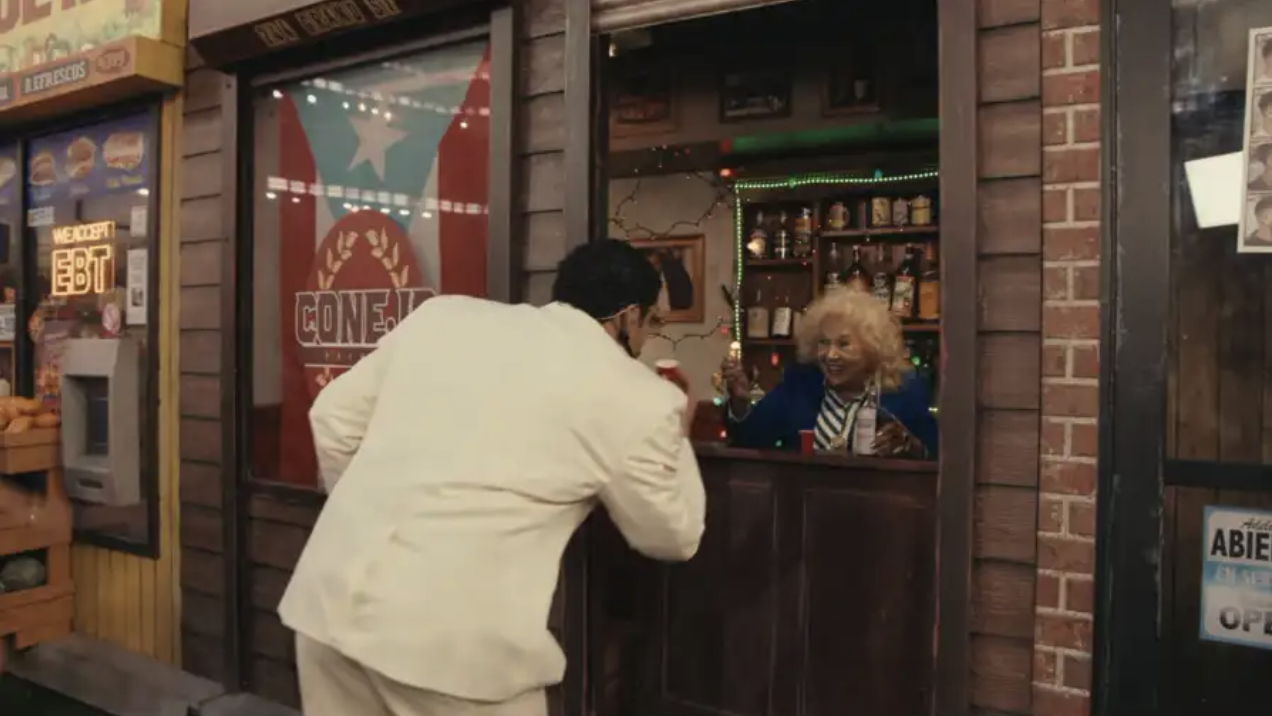
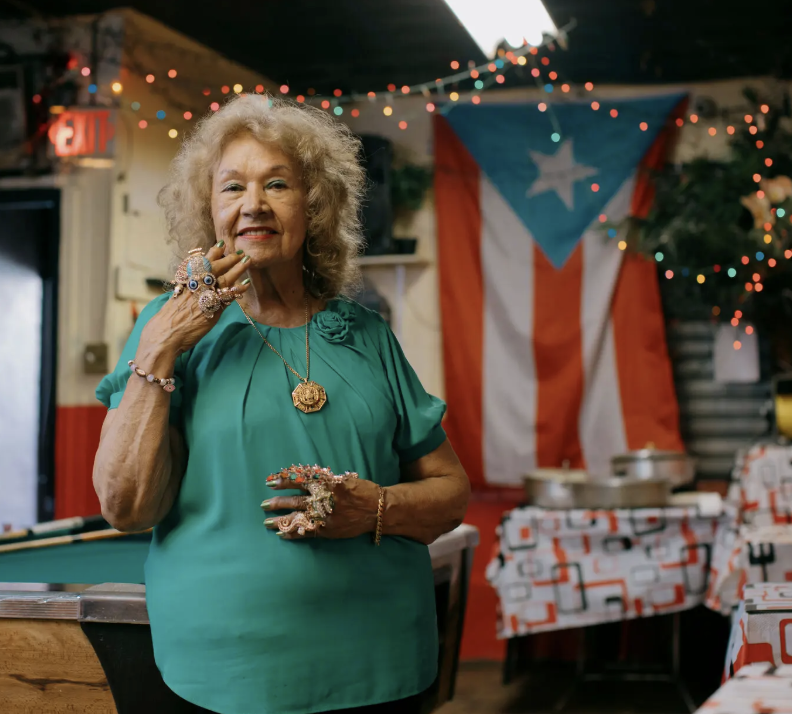
Including… a shot with boricua icon, Toñita!!!!!
Maria Antonia Cay (Toñita) founded the Caribbean Social Club in Williamsburg in the 1970s, at the height of Puerto Rican migration to New York (it’s still open today!!)
A tribute to the generation that built Puerto Rican New York.
The Little Boy & The Grammy (I’m crying!)
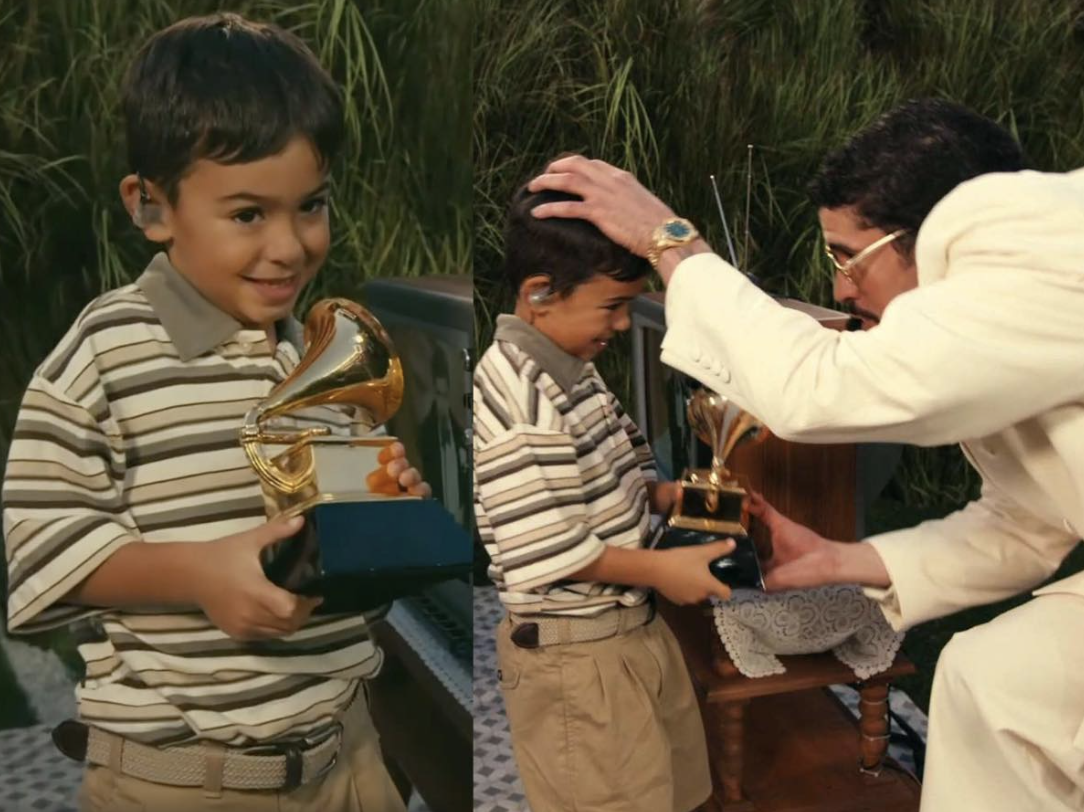
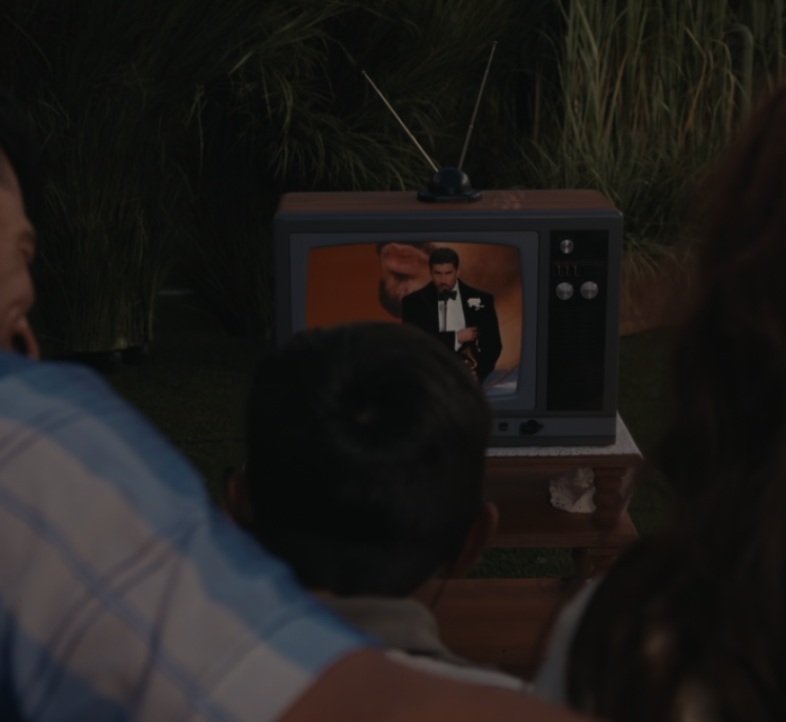
A little boy watching Bad Bunny’s 2026 Grammy acceptance speech. Benito walks over, hands the boy the Grammy, pats his head.
He’s handing the award not only to his younger self, but also to the next generation.
Again, I am crying!!!!!
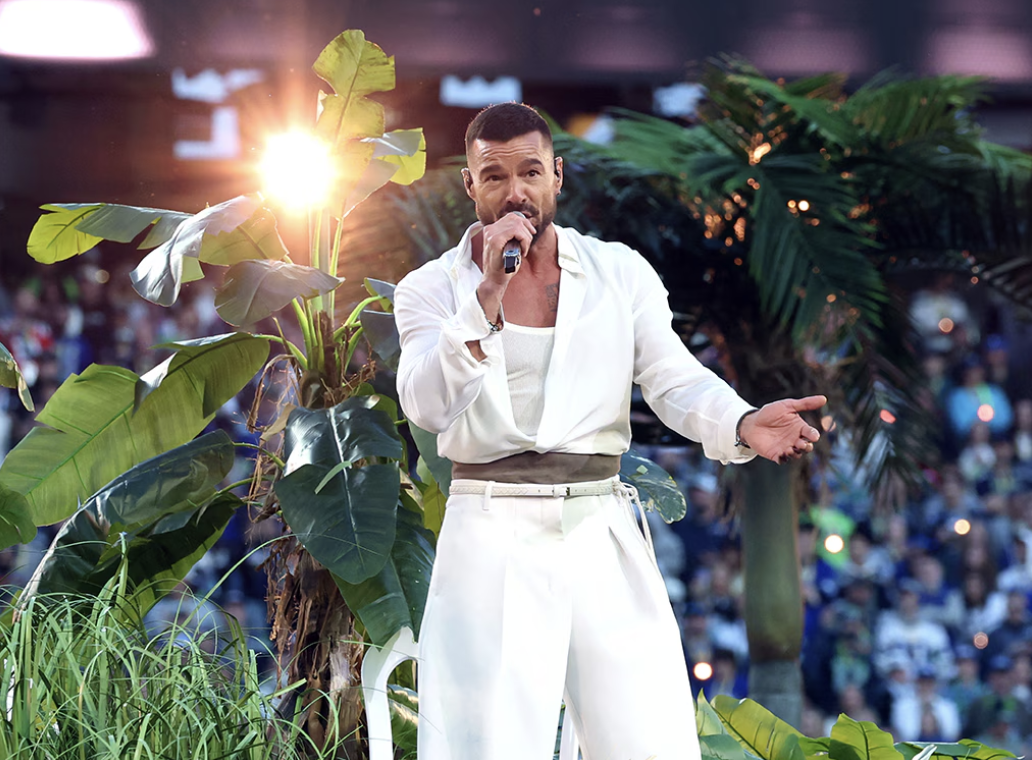
Ricky Martin!!!!!!!!
A bridge between eras of Latin (specifically Puerto Rican) music
Before Bad Bunny, Ricky Martin was one of the first Puerto Rican artists to break into the global mainstream (he opened the door)
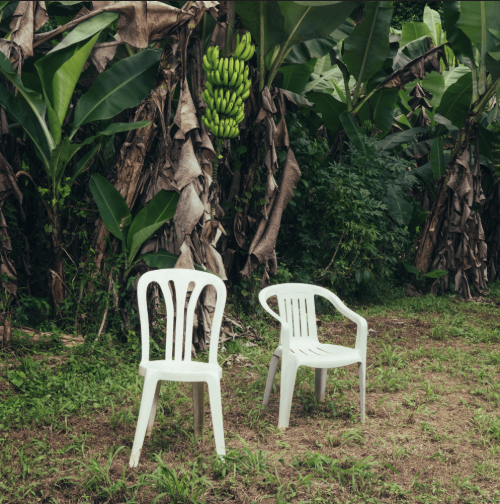
Ricky in the white chairs, mirroring the DTMF album cover:
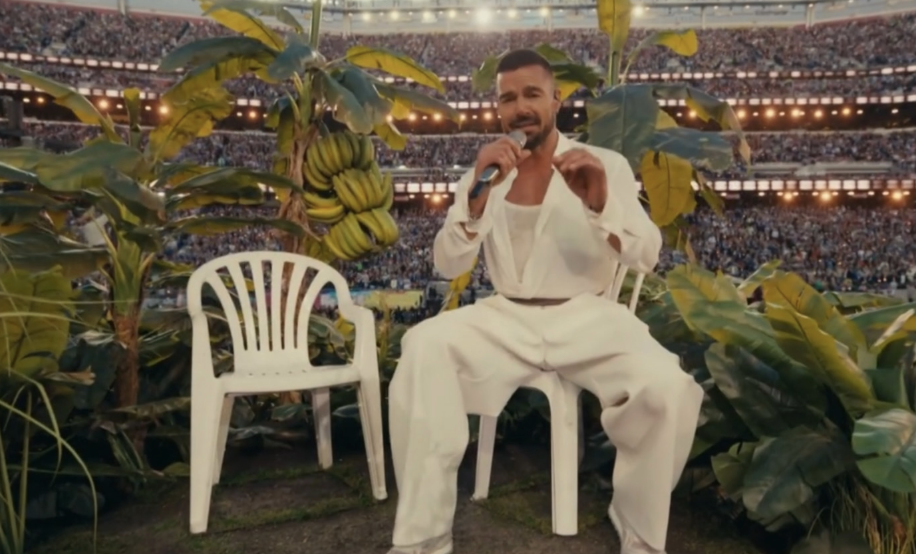
Ricky Martin sang Bad Bunny’s “Lo Que Le Pasó a Hawaii” (a protest song about displacement and gentrification) with a cool old school salsero vibe:
Quieren quitarme el río y también la playa (They want to take away the river and also the beach)
Quieren al barrio mío y que abuelita se vaya (They want my neighborhood and they want grandma to leave)
No, no suelte' la bandera ni olvide' el lelolai (No, don't let go of the flag or forget the rural Puerto Rican cry)
Que no quiero que hagan contigo lo que le pasó a Hawái (I don't want them to do to you what happened to Hawaii)
aka….. don’t let Puerto Rico become another tourist playground where locals can’t afford to live.
“El Apagón” (The Blackout)
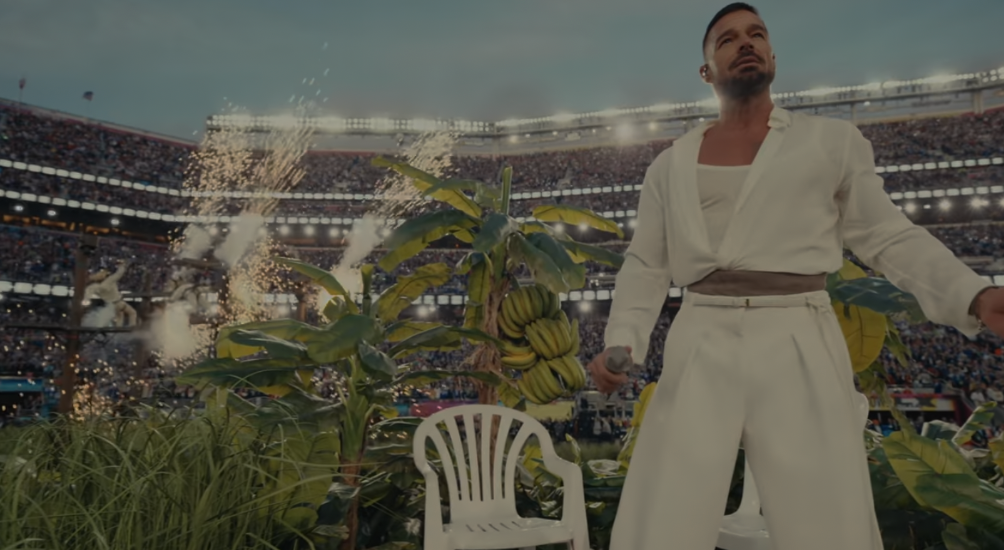
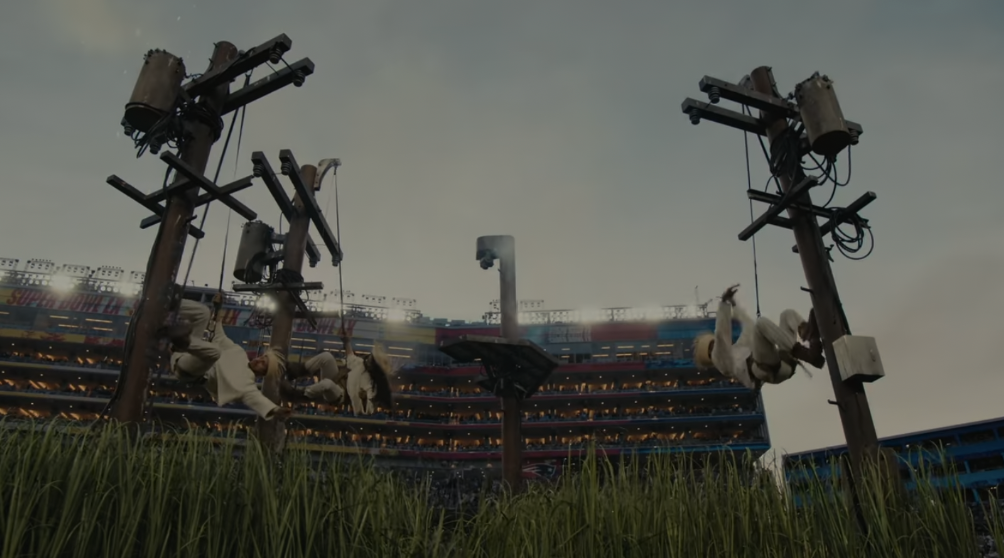
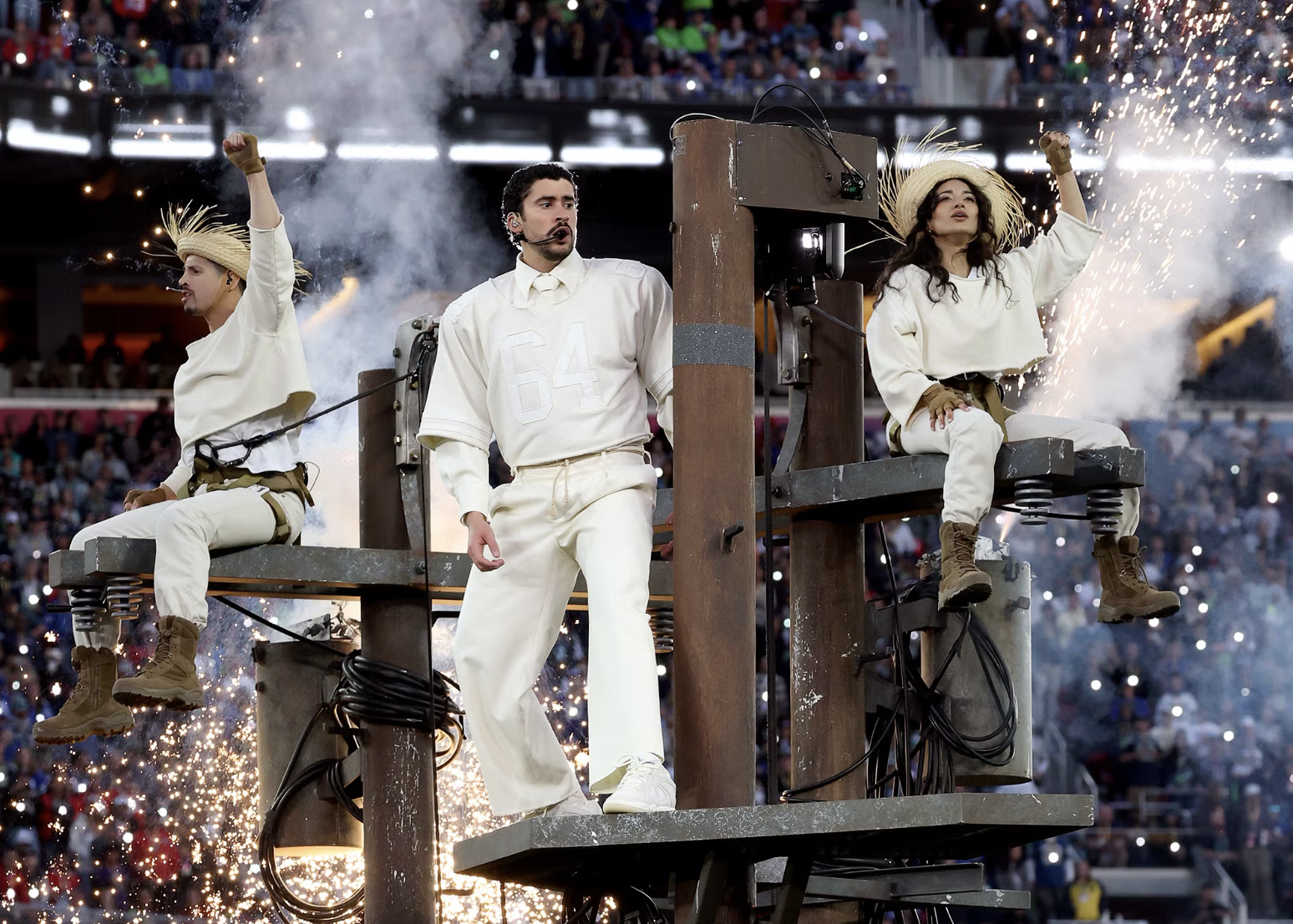
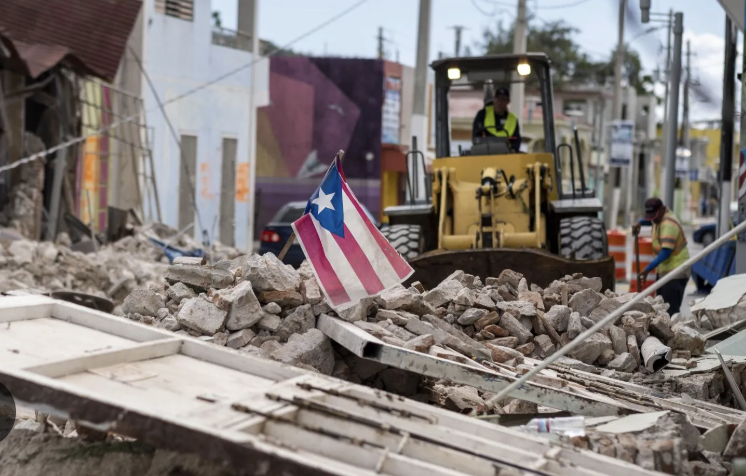
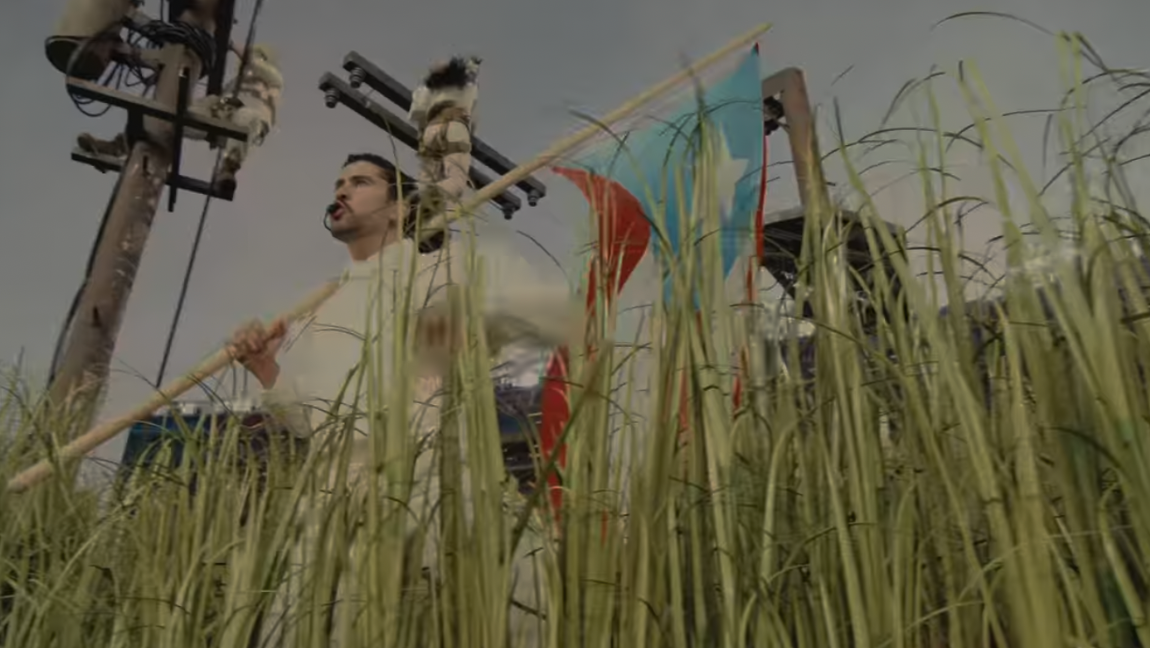
A song and performance about Puerto Rico’s power grid crisis.
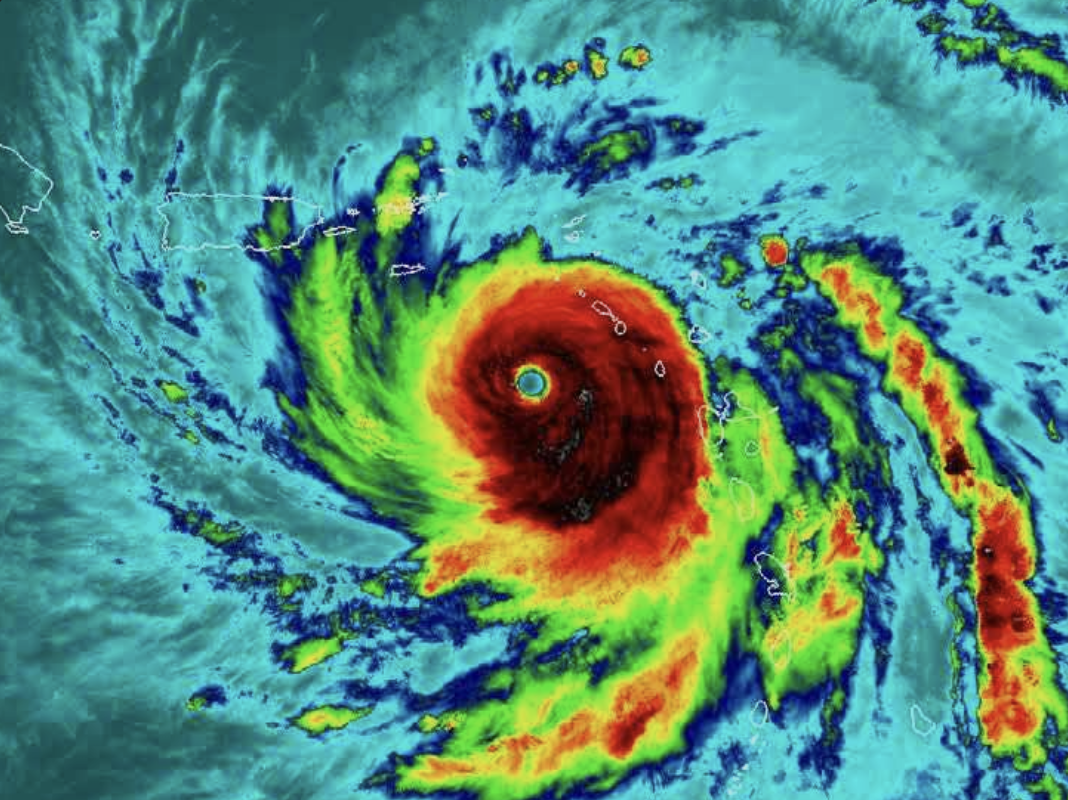
Hurricane Maria (2017) destroyed Puerto Rico’s power grid. It left parts of the island without electricity for nearly a year. The longest blackout in modern U.S. history.
Maria exposed how fragile the grid was, and still is.
The system never fully recovered. Today, outages are still common. Basic infrastructure still fails.
Light Blue vs Dark Blue
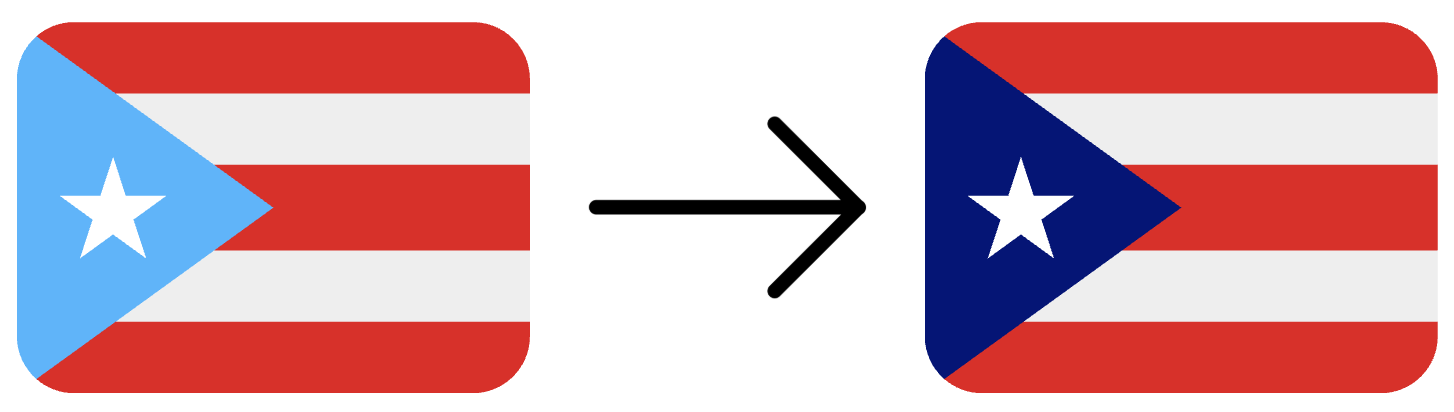
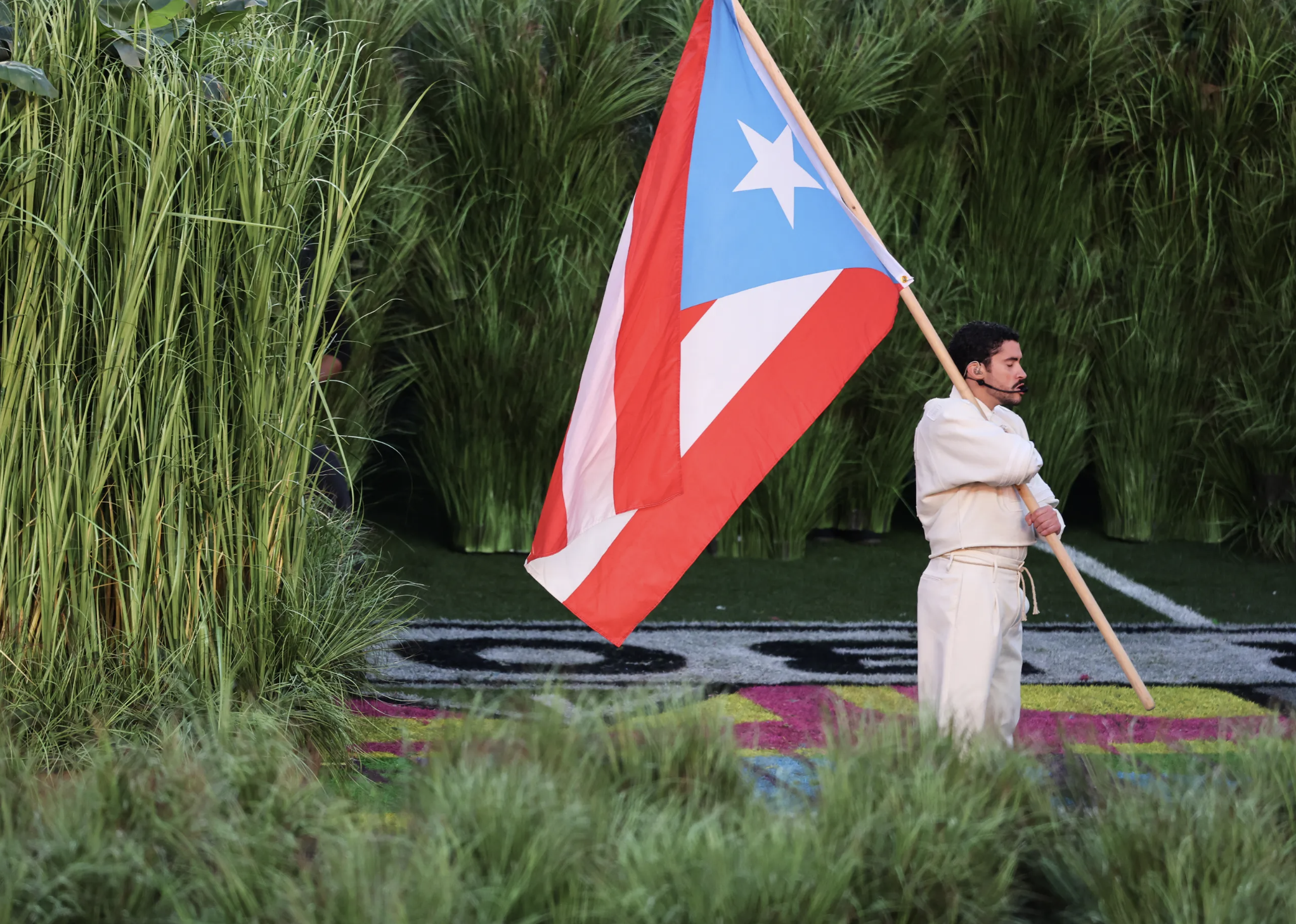
The original Puerto Rican flag (1895) featured a light blue triangle
From 1898 to 1952, after the U.S. took control of the island, the Puerto Rican flag was illegal. One could be fined or imprisoned for flying it.
In 1952, when Puerto Rico became a Commonwealth, the flag was legalized and standardized: the light blue changed to a darker navy shade (to align with the U.S. flag…)
Today, the light blue is used as a quiet act of reclamation
ROLL CALL
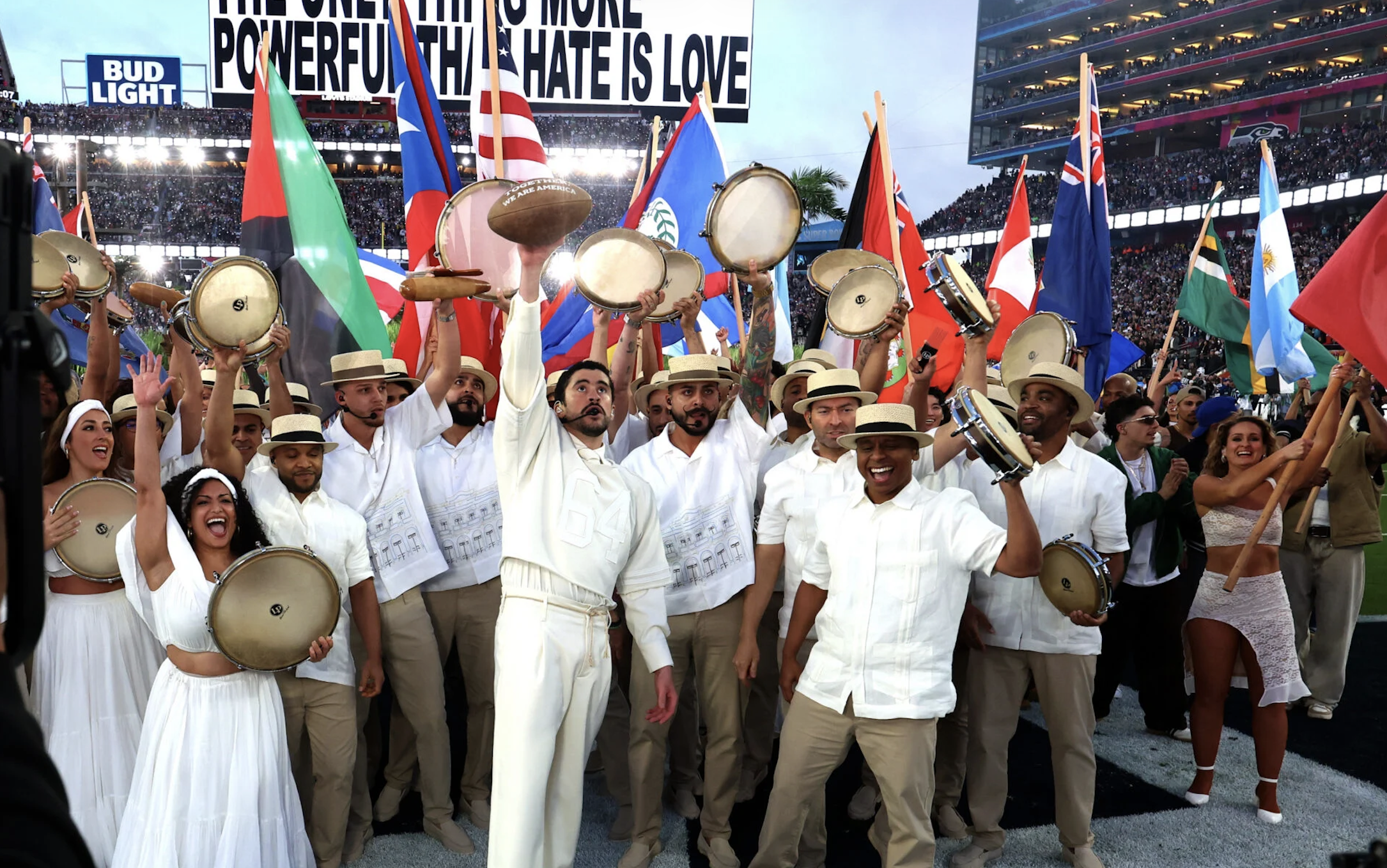
“God Bless America,
Chile, Argentina, Uruguay, Paraguay, Bolivia, Peru, Ecuador, Brazil, Colombia, Venezuela, Guiana, Panama, Costa Rica, Nicaragua, Honduras, El Salvador, Guatemala, Mexico, Cuba, the Dominican Republic, Jamaica, Haiti, United States, Canada
y my motherland, mi patria, Puerto Rico.”
Bad Bunny ends his show by naming the countries across North, Central and South America:
“Seguimos aquí.”
We’re still here